

Vital Pulp Therapy: A Modern Alternative to Root Canal Treatment
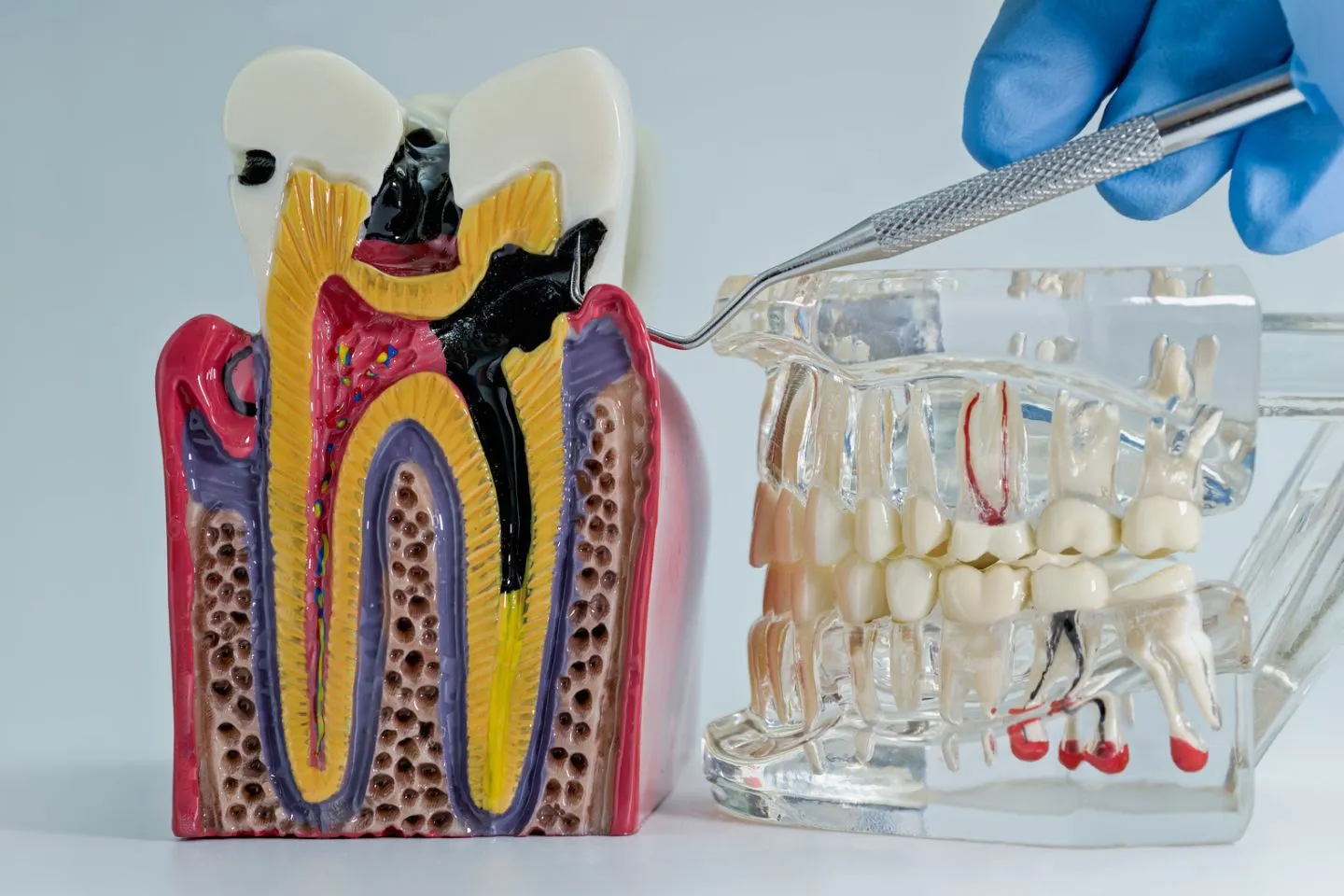
When a tooth develops deep decay, cracks, or an injury that affects the dental pulp, root canal treatment is often discussed as a way to manage the problem. However, root canal treatment is not always the only option. In selected cases, vital pulp therapy in Singapore may allow part or all of the healthy pulp tissue to remain in place while the tooth is treated.
The purpose of vital pulp therapy is to manage inflammation or exposure of the pulp while preserving the tooth's natural structure and function. Whether this approach is appropriate depends on factors such as the condition of the pulp, the extent of decay or injury, the tooth's structure and the findings from a dental examination.
For patients looking for a root canal alternative, understanding how pulp therapy works can make discussions about treatment options easier.
What Is Vital Pulp Therapy?
Vital pulp therapy is a group of procedures used to treat a tooth when the dental pulp is inflamed, exposed or at risk of becoming infected, while maintaining viable pulp tissue where possible.
The pulp is the living tissue inside a tooth. It contains nerves, blood vessels and connective tissue. Although it is commonly associated with tooth sensitivity and pain, the pulp also plays a role in the development and continued health of a tooth.
Vital pulp therapy may include procedures such as:
- Indirect pulp treatment
- Direct pulp capping
- Partial pulpotomy
- Full pulpotomy
The specific procedure depends on how much of the pulp is affected and whether healthy tissue can be maintained.
This means that pulp therapy in Singapore is not a single treatment. It describes several approaches that may be considered when preserving vital pulp tissue is clinically appropriate.
Why Might Vital Pulp Therapy Be Considered?
Deep dental decay can progress towards the pulp. If the decay is removed completely, the pulp may be exposed or become irritated. Traditionally, this situation may lead to consideration of root canal treatment.
In some cases, however, the pulp may still have the capacity to recover. A dentist may therefore assess whether vital pulp therapy could be suitable.
Possible reasons for considering the treatment include:
Deep Tooth Decay
A cavity that has progressed close to the pulp may cause sensitivity or discomfort. If the pulp is still capable of healing, pulp-preserving treatment may be considered.
Accidental Dental Injury
A fall, sports injury or impact can damage a tooth and sometimes expose the pulp. Depending on the injury and the condition of the tooth, vital pulp treatment may be an option.
Pulp Exposure During Dental Treatment
During the removal of deep decay, the pulp may occasionally become exposed. The dentist may assess whether the exposure can be managed while keeping some healthy pulp tissue.
Vital Pulp Therapy vs Root Canal Treatment
The main difference between the two approaches is what happens to the pulp.
With root canal treatment, the inflamed or infected pulp is removed from inside the tooth. The root canals are then cleaned, shaped and sealed.
With vital pulp therapy, the aim is to preserve healthy, living pulp tissue where clinically possible.
This does not mean that vital pulp therapy is suitable for everyone. If the pulp has sustained irreversible damage or there is significant infection around the root, root canal treatment may still be recommended.
A dental examination is therefore important before deciding between pulp therapy and root canal treatment.
Can Vital Pulp Therapy Preserve the Natural Tooth?
One of the objectives of preserve natural tooth Singapore treatment approaches is to retain as much of the patient's own tooth structure as reasonably possible.
Keeping a natural tooth can help maintain normal biting and chewing. It can also avoid or delay the need for tooth replacement in suitable cases.
However, preserving the natural tooth does not necessarily mean that every part of the tooth can remain untreated. Damaged or infected tissue may still need to be removed, and the tooth may require a restoration to protect it.
The condition of the remaining tooth structure is an important part of treatment planning.
What Happens During Vital Pulp Therapy?
The exact steps vary depending on the procedure.
1. Examination and Assessment
The dentist will examine the tooth and may ask about symptoms such as pain, sensitivity to hot or cold, tenderness or discomfort when biting.
Dental X-rays may also be used to assess the tooth and surrounding structures.
2. Removing Decay or Damaged Tissue
The tooth is carefully cleaned, and affected areas are removed. The dentist assesses the condition of the pulp during treatment.
3. Treating the Pulp
Depending on the findings, the dentist may protect an exposed area with a suitable material or remove only the affected portion of the pulp.
4. Sealing and Restoring the Tooth
The treated area is sealed to reduce the risk of bacterial contamination. A filling or other restoration may then be placed to restore the tooth's shape and function.
The dentist may also recommend follow-up appointments to assess how the tooth is responding.
What Symptoms May Indicate a Pulp Problem?
Symptoms can vary considerably. A tooth affected by deep decay or pulp inflammation may cause:
- Sensitivity to hot or cold
- Pain when eating or drinking
- Pain when biting
- Spontaneous toothache
- Persistent discomfort
- Tenderness around the tooth
- Darkening of a previously injured tooth
Some teeth may have significant pulp damage with relatively few symptoms. For this reason, the absence of pain does not necessarily mean that a tooth is healthy.
If symptoms persist or become more frequent, arranging a dental assessment can help determine what is happening inside the tooth.
Is Vital Pulp Therapy Suitable for Adults?
Vital pulp therapy is not limited to children. It may also be considered for adults when the clinical circumstances are appropriate.
The suitability of treatment depends on factors including:
- The extent and depth of tooth decay
- The condition of the pulp
- The presence or absence of infection
- The nature of any dental injury
- The amount of healthy tooth structure remaining
- The ability to seal and restore the tooth properly
A dentist will assess these factors before recommending a treatment approach.
What About Children and Developing Teeth?
Pulp-preserving treatment can be particularly relevant for developing permanent teeth. Maintaining the vitality of the pulp may support continued root development in an immature permanent tooth.
For children with deep decay or dental trauma, preserving the health of a developing tooth can therefore be an important consideration.
Parents should seek assessment if a child's tooth has been knocked, chipped or damaged, even if the child does not appear to be in pain.
What Are the Benefits of Preserving Healthy Pulp?
The pulp has a natural role within the tooth, so preserving viable tissue may have advantages when it is clinically possible.
Potential benefits include:
- Retaining living tissue within the tooth
- Preserving more of the natural tooth structure
- Supporting continued development of immature teeth
- Avoiding removal of the entire pulp when it is not necessary
- Maintaining the natural tooth rather than moving directly towards extraction
These potential benefits need to be considered alongside the condition of the tooth and the likelihood of successful healing.
Is Vital Pulp Therapy a Guaranteed Alternative to Root Canal Treatment?
No. Vital pulp therapy should not be viewed as a treatment that can replace root canal treatment in every case.
Some teeth have pulp inflammation or infection that cannot be managed by preserving the tissue. In such situations, root canal treatment may be more appropriate.
There is also a possibility that a tooth treated with vital pulp therapy may develop further symptoms or pulp deterioration and require additional treatment later.
The aim is to choose an appropriate treatment based on the condition of the individual tooth rather than assuming that one procedure is suitable for every patient.
How Can You Reduce the Risk of Pulp Problems?
Preventing deep decay and dental injuries can reduce the likelihood of problems involving the pulp.
Good oral care includes:
- Brushing twice daily with fluoride toothpaste
- Cleaning between the teeth regularly
- Limiting frequent consumption of sugary foods and drinks
- Attending routine dental examinations
- Wearing a suitable mouthguard for contact sports
- Seeking dental care after an injury
- Having tooth sensitivity assessed rather than ignoring it
Early treatment of decay may also reduce the likelihood of the cavity progressing towards the pulp.
When Should You See a Dentist?
Consider arranging a dental appointment if you experience persistent toothache, sensitivity that lingers after hot or cold foods, pain when biting, swelling or discomfort following an injury.
Dental trauma should also be assessed promptly, particularly if a tooth has been displaced, fractured or knocked out.
At The Endodontic Office, patients can discuss symptoms and treatment options with the dental team as part of an individual assessment. As a dental clinic in Singapore, the practice can assess the affected tooth and explain whether vital pulp therapy, root canal treatment or another approach may be appropriate.
Discuss Your Tooth Pain With a Dentist
If you have been told that you may need root canal treatment, ask about the condition of your pulp and whether a pulp-preserving approach could be appropriate for your tooth. Contact The Endodontic Office to arrange an assessment and discuss the available treatment options.
FAQ
Q1: What is vital pulp therapy in Singapore?
A: Vital pulp therapy refers to treatments designed to manage inflammation or exposure of the dental pulp while preserving healthy, living pulp tissue where possible. It may include procedures such as pulp capping or pulpotomy, depending on the condition of the tooth.
Q2: Is vital pulp therapy an alternative to root canal treatment?
A: In selected cases, it may provide a root canal alternative. However, it is not suitable for every tooth. If the pulp is irreversibly damaged or there is significant infection, root canal treatment may still be recommended.
Q3: Can vital pulp therapy preserve a natural tooth?
A: One of its aims is to help retain the natural tooth while preserving healthy pulp tissue where possible. The outcome depends on the condition of the tooth, the extent of damage and how the pulp responds to treatment.
Q4: Is pulp therapy only for children?
A: No. Vital pulp therapy may be considered for both children and adults when the clinical circumstances are appropriate. It can be particularly useful in developing permanent teeth because maintaining pulp vitality can support continued root development.
Q5: How do I know whether I need vital pulp therapy or root canal treatment?
A: A dentist needs to assess the tooth, symptoms, pulp condition and surrounding tissues before making a recommendation. Dental X-rays and other clinical tests may be used as part of the assessment.
Q6: Can a tooth need root canal treatment after vital pulp therapy?
A: Yes. Although the aim is to preserve healthy pulp tissue, the pulp may not heal as expected. If symptoms or signs of further pulp disease develop, additional treatment, including root canal treatment, may be required.
Our Locations
Multiple locations, one trusted team. Expert endodontic care wherever you are.
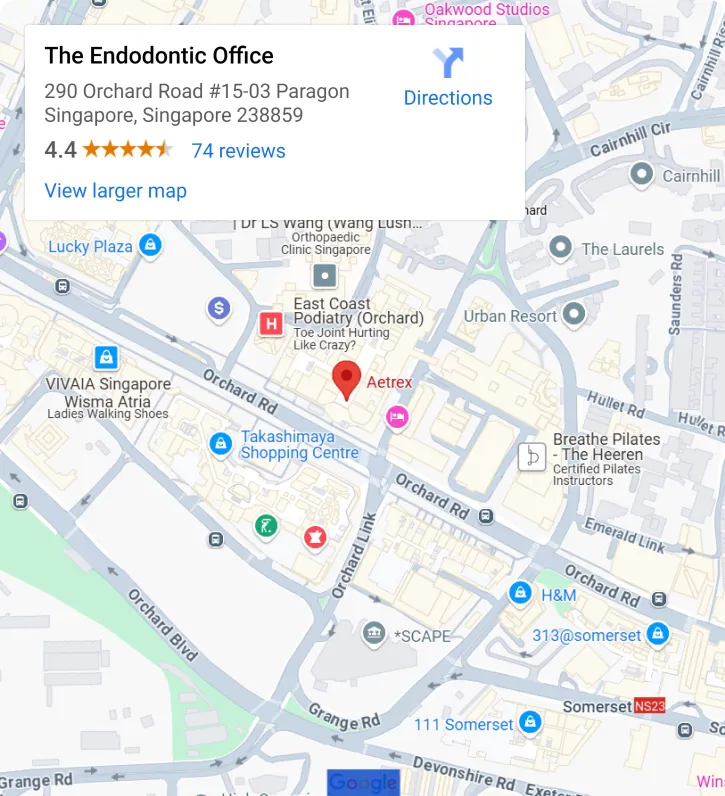


Orchard, Paragon Medical
Address: 290 Orchard Road, #15-03, Paragon, Singapore 238859
Phone: +65 6734 7790
WhatsApp: +65 9782 8446
Email: appointment@endooffices.com

Novena, Royal Square Medical Centre
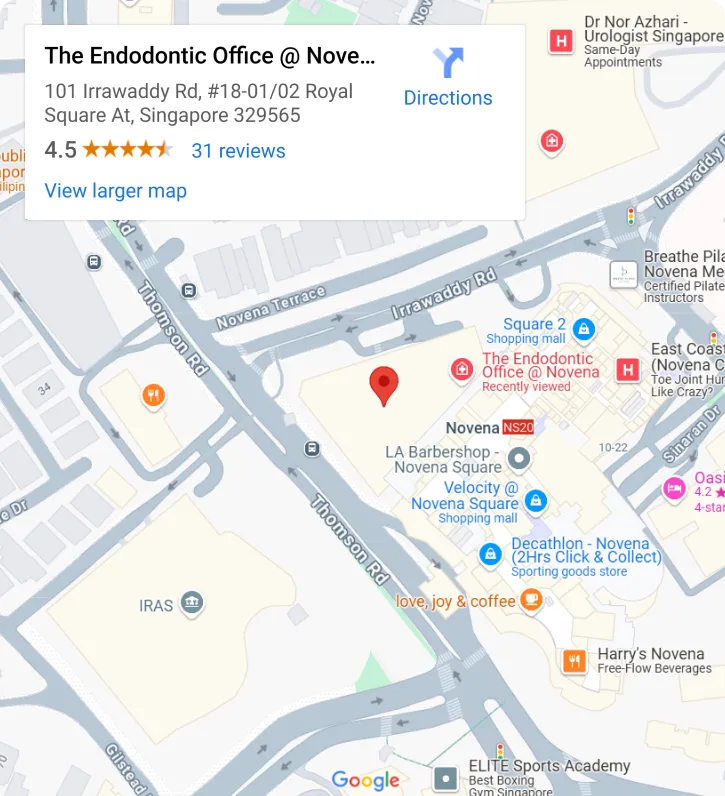
Address: 101 Irrawaddy Road, #18-01/02, Royal Square, Singapore 329565
Phone: +65 6259 3100
WhatsApp: +65 8078 9638
Email: appointment@endooffices.com

Jurong East, Vision Exchange
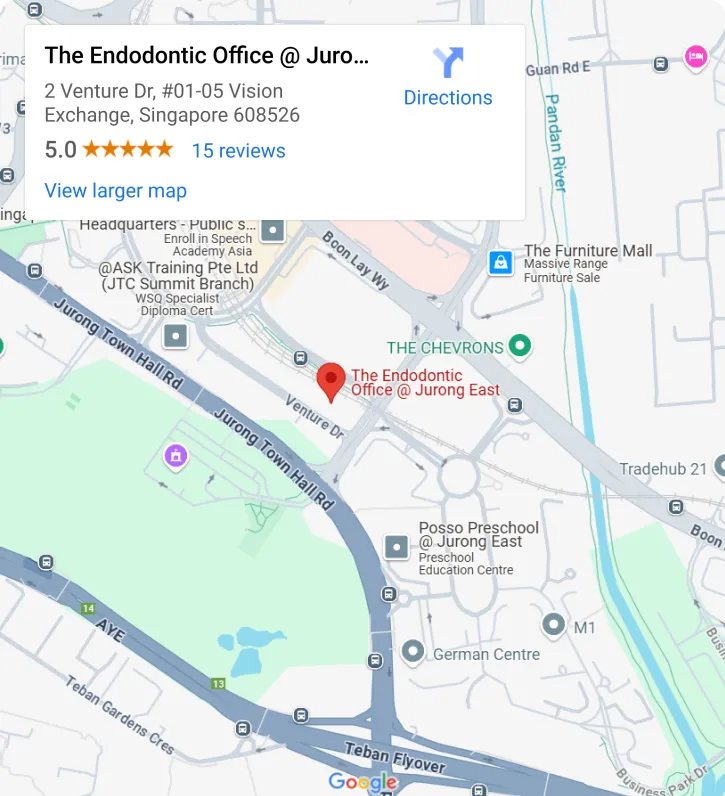
Address: 2 Venture Drive, #01-05, Vision Exchange, Singapore 608526
Phone: +65 6874 7790
WhatsApp: +65 8076 1813
Email: appointment@endooffices.com
The Endodontic Office is a trusted specialist dental practice in Singapore focused on advanced root canal treatment, effective dental pain relief, and preserving natural teeth through modern technology and expert care.

©2026 The Endodontic Office | All Rights reserved | Privacy Policy | Digital Marketing by Remedo