

Root Canal Retreatment vs Extraction: What to Know
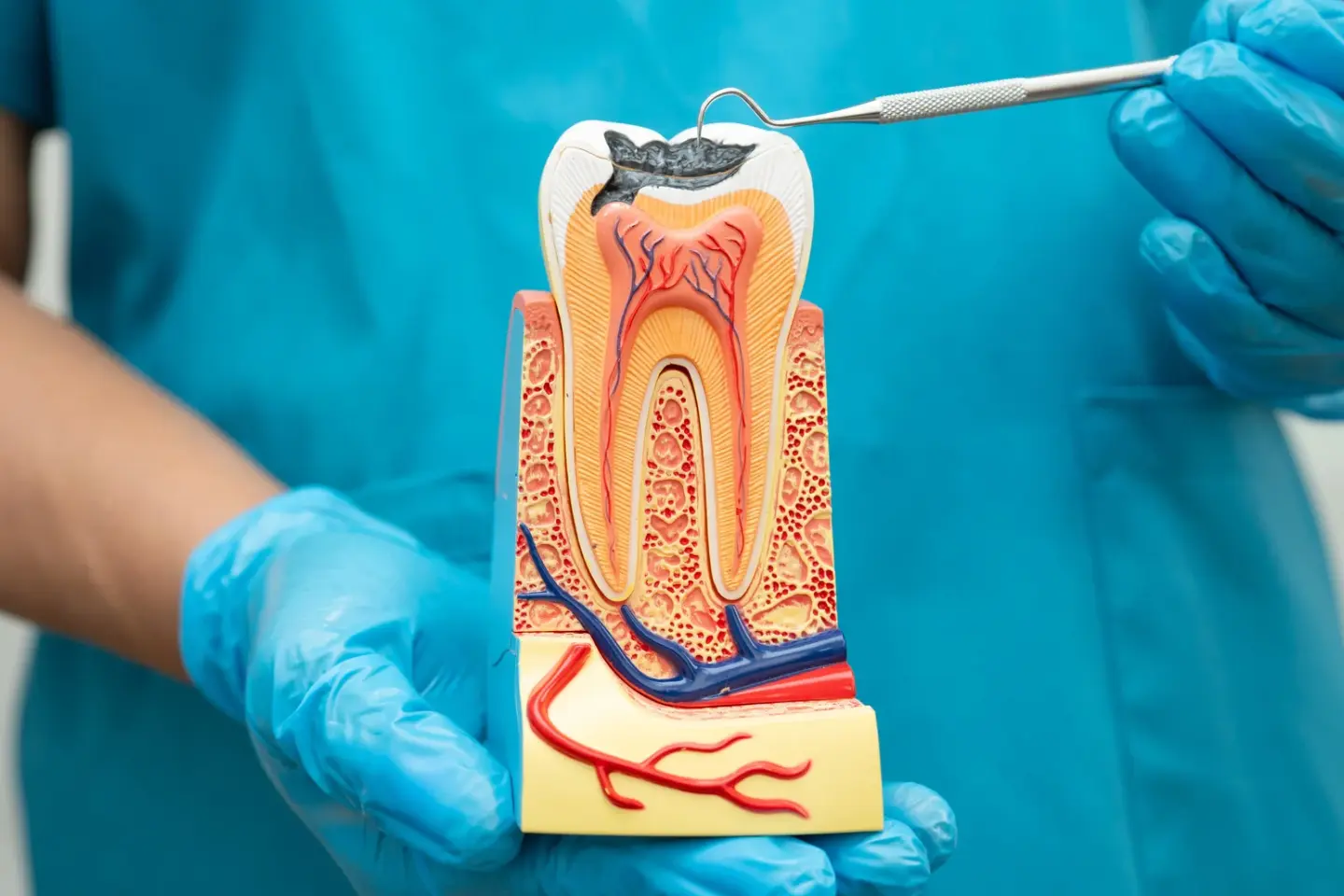
You’re sitting in a dental clinic, staring at an X-ray on the screen. The dentist is telling you that the tooth you had root canal treatment on years ago has flared up again. Now your mind starts running through the options. Do you go through another round of root canal treatment, or is it simpler to just have the tooth taken out and be done with it? Sound familiar? A lot of patients in Singapore end up at exactly this crossroads, usually after a dull ache returns, or a routine check-up turns up a problem brewing beneath a crown that looked perfectly fine on the surface.
This isn’t a decision to rush. It affects your bite, your jawbone, your future dental costs, and sometimes your confidence when you smile. So let’s walk through what’s actually involved in each option, so you can have a clearer, calmer conversation with your dentist when the time comes.
Why a Previously Treated Tooth Can Fail
Root canal treatment has a good track record. But it isn’t invincible. Over time, a tooth that’s already been treated can develop new problems. Maybe a tiny canal got missed during the original procedure. Maybe a crack formed in the root, or the filling or crown seal broke down and let bacteria back in. Sometimes new decay just creeps in beneath an old restoration. When this happens, the tissue around the root can become inflamed or infected again, sometimes without any pain at all, until it shows up on a scan.
At this point, the two realistic paths forward are usually root canal retreatment or tooth extraction in Singapore. Neither one is automatically right for everyone. It depends on the tooth, the extent of the damage, and what you want for your long-term oral health.
What Root Canal Retreatment Involves
Root canal retreatment is basically a second attempt to clean out and seal the inside of a tooth that’s already been through root canal treatment. The dentist reopens the tooth, removes the old filling material from the canals, cleans out any infection, checks for missed canals or small fractures, and reseals everything before a new crown or restoration goes on top.
The appeal here is pretty simple: it gives you a shot at keeping your natural tooth. Keeping your own tooth means your jawbone keeps getting stimulated by normal chewing, your bite stays the same, and you skip the need for a bridge, denture, or implant down the road. For a lot of patients, that matters. Especially for teeth that do a lot of the work when you chew, or that show when you smile.
That said, retreatment isn’t right for every case. If the tooth has a vertical root fracture, serious bone loss around the root, or just isn’t restorable because of extensive decay, your dentist might tell you extraction is the more sensible route. This is where a proper assessment (often including a 3D scan) becomes important before anyone decides anything.
What Tooth Extraction Involves
Tooth extraction is more final. The tooth comes out entirely, which resolves the infection at its source immediately, since there’s no tooth structure left for bacteria to hide in. For some patients, particularly those with teeth that are badly broken down, cracked below the gum line, or have already failed multiple treatments, extraction can be the reasonable, practical choice.
Here’s the catch. The trade-off shows up afterwards. Once a tooth is gone, the surrounding bone can gradually change shape and volume if nothing replaces it. Neighbouring teeth may shift. Your bite may be affected. This is why extraction is rarely the end of the conversation. Most dentists will bring up replacement options early, things like a dental implant, bridge, or denture, so you understand the full picture of cost and treatment time before deciding.
Weighing Cost and Time
Patients often ask about cost, and it’s a fair question. Root canal retreatment plus a new crown can sometimes cost more upfront than a straightforward extraction. But if extraction is followed by an implant or bridge to fill the space, the total cost and number of visits can end up similar, or even higher, than retreatment. Easier said than done to compare properly on your own though. So it’s worth asking your dentist to lay out the full treatment pathway and rough costs for both options, so you’re comparing like for like, not just the first step.
Making the Decision With Your Dentist
There’s no single answer that fits every patient or every tooth. A tooth with a small, treatable issue and plenty of healthy structure left is often a good candidate for retreatment. A tooth that’s cracked, badly broken down, or keeps getting infected despite previous treatment may be better off with extraction and replacement.
Endodontic treatment in Singapore has come a long way. Better imaging and rotary instruments now let dentists spot problems that used to be harder to catch. That means some teeth that might once have been pulled can now be reassessed and treated with retreatment instead. But that doesn’t mean retreatment is always achievable, or advisable. A dentist with a special interest in endodontics can help work out whether your specific tooth has a reasonable chance of healing after retreatment, based on its structure, how far the infection has spread, and your overall oral health.
At The Endodontic Office, we take the time to walk you through your scans and explain what we’re actually seeing, so the decision doesn’t feel like guesswork. Sometimes the answer is clear cut. Other times, it genuinely comes down to what you value more: keeping the natural tooth if there’s a reasonable shot at success, or moving toward a replacement option with more certainty about the outcome.
Ready to Get Started?
If you’ve been told a treated tooth is acting up again, get a clear assessment before deciding on anything. The team at The Endodontic Office can review your tooth, talk through whether retreatment is realistic, and explain what extraction and replacement would involve if that ends up being the better fit. Book a consultation with The Endodontic Office to get answers specific to your tooth and your situation.
Frequently Asked Questions
Q: How do I know if my tooth can be saved with retreatment?
A: This depends on things like how much healthy tooth structure is left, whether there’s a crack in the root, and how much bone support remains around the tooth. A dental scan and clinical exam are usually needed before your dentist can give you a straight answer.
Q: Is root canal retreatment painful?
A: Most patients say it feels similar to a first root canal treatment, and local anaesthesia is used throughout. Some tenderness afterwards is normal and usually settles within a few days.
Q: What happens if I choose extraction and don’t replace the tooth?
A: The surrounding bone may gradually change shape over time, and neighbouring teeth can shift into the empty space. This can affect your bite and make future replacement trickier, so it’s worth discussing replacement plans even if you’re not ready to decide right away.
Q: Can every tooth be retreated?
A: No. Teeth with vertical root fractures, extensive decay below the gum line, or very little remaining bone support are often not good candidates for retreatment. In these cases, extraction may be the better recommendation.
Q: How long does root canal retreatment take?
A: Usually one to two appointments, depending on how complex the canal system is and whether the old filling material is tricky to remove. Your dentist will give you a clearer estimate once they’ve assessed your tooth.
Our Locations
Multiple locations, one trusted team. Expert endodontic care wherever you are.
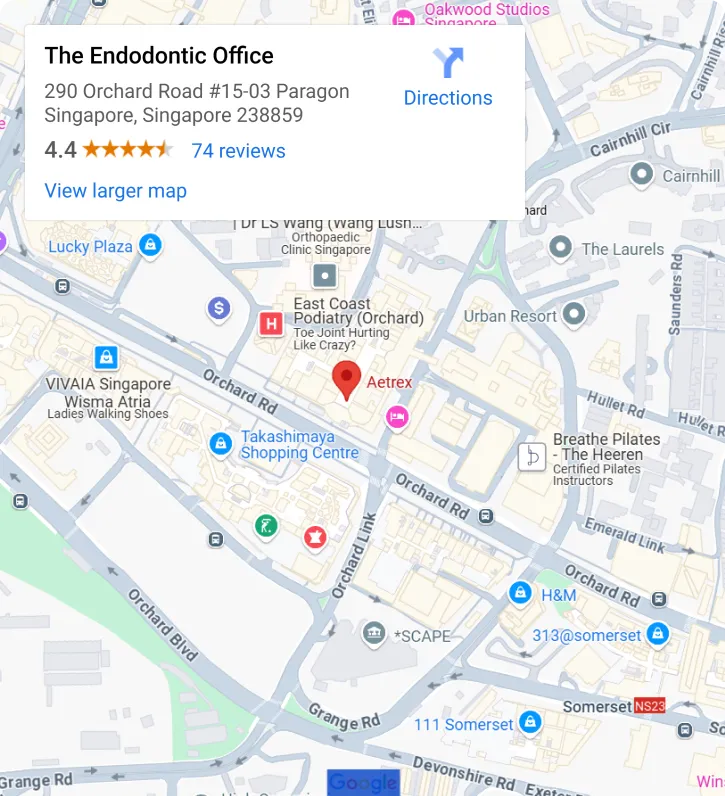


Orchard, Paragon Medical
Address: 290 Orchard Road, #15-03, Paragon, Singapore 238859
Phone: +65 6734 7790
WhatsApp: +65 9782 8446
Email: appointment@endooffices.com

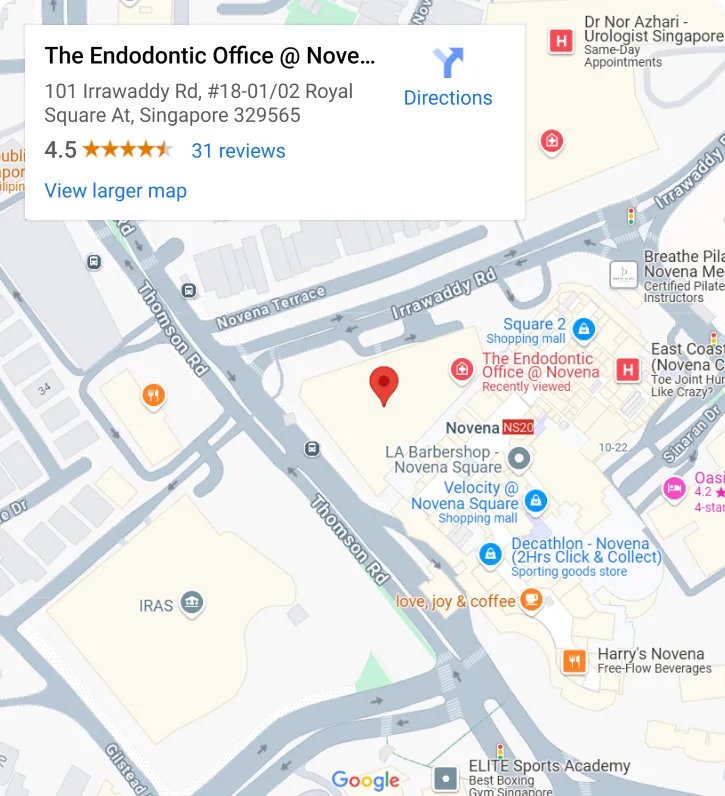
Novena, Royal Square Medical Centre
Address: 101 Irrawaddy Road, #18-01/02, Royal Square, Singapore 329565
Phone: +65 6259 3100
WhatsApp: +65 8078 9638
Email: appointment@endooffices.com

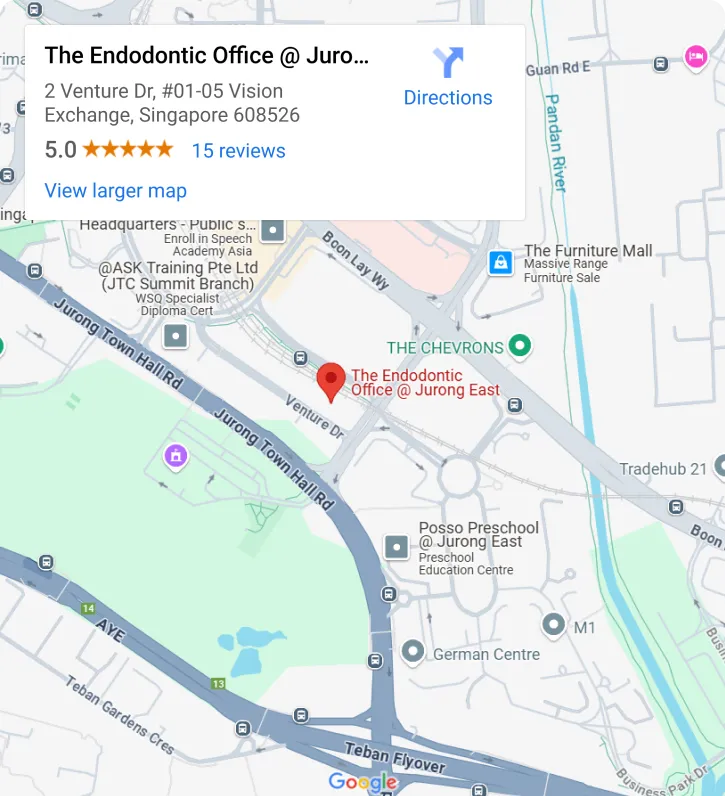
Jurong East, Vision Exchange
Address: 2 Venture Drive, #01-05, Vision Exchange, Singapore 608526
Phone: +65 6874 7790
WhatsApp: +65 8076 1813
Email: appointment@endooffices.com
The Endodontic Office is a trusted specialist dental practice in Singapore focused on advanced root canal treatment, effective dental pain relief, and preserving natural teeth through modern technology and expert care.

©2026 The Endodontic Office | All Rights reserved | Privacy Policy | Digital Marketing by Remedo