

Does a Fractured and Infected Tooth Need to Be Extracted?
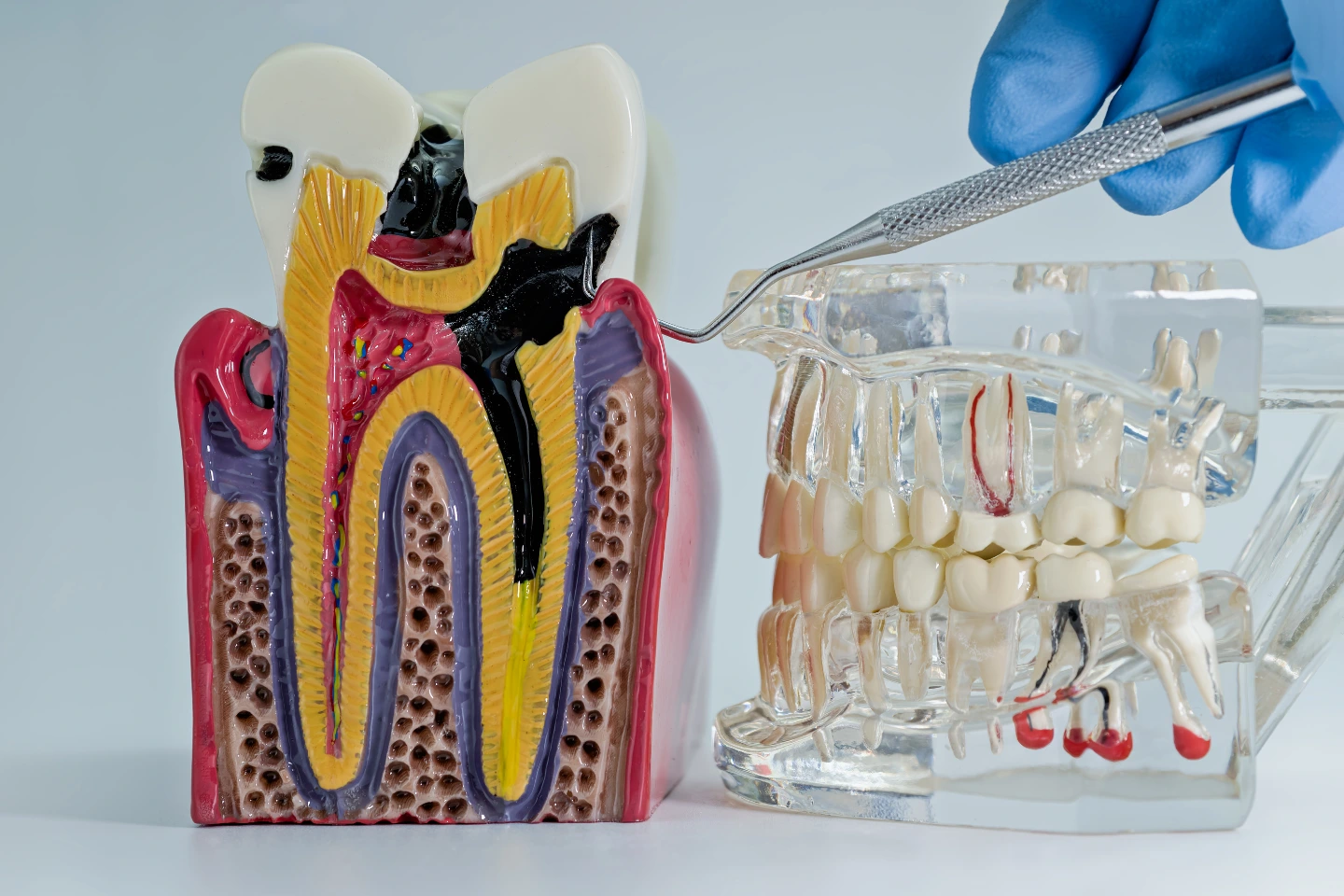
Dental fractures and infections are among the most common reasons patients experience severe tooth pain. When a tooth is both fractured and infected at the same time, many patients assume that extraction is the only possible treatment. However, extraction is not always necessary. In many cases, advanced endodontic procedures can save the natural tooth, relieve pain, and restore function.
At The Endodontic Office in Singapore, our specialist endodontists focus on diagnosing and treating complex dental infections and fractures. With modern imaging technology and specialized microsurgical techniques, we can often preserve teeth that might otherwise be removed.
This blog explains the types of tooth fractures, how infections develop, and whether extraction is required. It also outlines the treatment options available to save your tooth.
Understanding Tooth Fractures
Tooth fractures can occur due to trauma, decay, bruxism, biting on something hard, or weakened tooth structure after previous dental work. Not all fractures require extraction. Knowing the type of fracture helps determine whether the tooth can be saved.
1. Craze Lines
These are superficial cracks limited to the enamel. They are harmless, do not cause infection, and do not need extraction or root canal treatment.
2. Fractured Cusps
A piece of the chewing surface breaks off. These fractures rarely affect the pulp. The tooth can usually be restored with a crown.
3. Cracked Tooth (Vertical or Oblique Crack)
The crack extends deeper into the tooth but has not separated the root. If diagnosed early, a root canal performed by an endodontist can save the tooth.
4. Split Tooth
The tooth is separated into two distinct segments. This often requires extraction, although partial retention may be possible in rare cases.
5. Vertical Root Fracture
A crack begins at the root and travels upward. These are difficult to detect and usually not treatable. Extraction is typically required.
Not every fractured tooth is the same, and the exact location, depth, and direction of the fracture determine the appropriate treatment.
How Does a Tooth Become Infected?
An infection develops when bacteria enter the pulp through:
- Deep decay
- A fracture that exposes the pulp
- Failed restorations
- Previous dental trauma
- Untreated large cavities
When the infection reaches the inside of the tooth, the pulp becomes inflamed or dies, causing pain, swelling, and possible abscess formation. Without treatment, the infection can spread to the jawbone or surrounding tissues.
Endodontists specialize in treating infections inside the tooth using procedures such as root canal therapy or endodontic surgery.
Do All Fractured and Infected Teeth Need to Be Extracted?
The answer is no. Extraction is not always necessary. Many fractured and infected teeth can be saved with timely and appropriate treatment.
Teeth That Can Often Be Saved
A fractured and infected tooth may be treatable if:
- The crack does not extend below the gum line
- The root structure remains intact
- The infection is limited and can be removed through root canal treatment
- There is enough healthy tooth structure to support a crown
- The tooth has not split into two separate segments
In these cases, treatment options include:
- Root canal therapy
- Root canal retreatment
- Endodontic surgery
- Crown placement
- Restoration to protect the remaining structure
Endodontists are trained to determine whether saving the tooth is feasible.
Teeth That Usually Require Extraction
Extraction may be necessary if:
- The tooth has a vertical root fracture
- The crack extends deep into the root
- The tooth has split into separate pieces
- The infection has destroyed too much supporting bone
- There is not enough structure to hold a crown
- The tooth cannot be stabilized
Even when extraction is required, an endodontist will often provide the most accurate diagnosis and suggest preservation options for adjacent teeth.
How Endodontists Diagnose a Fractured and Infected Tooth
At The Endodontic Office Singapore, we use advanced diagnostic tools to determine whether your tooth can be saved.
1. Digital X-rays
These provide an initial look at the tooth, bone, and infection.
2. CBCT 3D Imaging
Cone Beam CT scans create a detailed three-dimensional view of the tooth, allowing us to identify cracks, hidden canals, and bone loss.
3. Clinical Examination
We check for pain, bite sensitivity, swelling, and mobility.
4. Transillumination and Microscopy
Using a specialized dental microscope helps detect fine cracks not visible to the naked eye.
This combination of technology and specialist experience ensures accurate diagnosis and a personalized treatment plan.
Treatment Options for Saving Fractured and Infected Teeth
1. Root Canal Treatment
If the tooth is infected but structurally stable, root canal therapy removes the infected pulp and seals the tooth. A crown is then placed to reinforce the structure.
2. Root Canal Retreatment
If a previous root canal has failed due to undetected cracks or persistent infection, retreatment may be recommended to remove bacteria and disinfect the canals.
3. Endodontic Surgery (Apicoectomy)
If infection remains at the root tip or the fracture is located near the root end, microsurgery can remove the infected tissue and seal the root.
4. Crown Placement
After endodontic treatment, a crown restores the tooth’s strength and protects it from further fracture.
5. Splinting
In some cases, temporary stabilization can help support a cracked tooth while healing occurs.
These treatments can often save teeth that would otherwise be extracted when handled by a skilled endodontist.
Why Saving Your Natural Tooth Matters
There are significant benefits to preserving natural teeth whenever possible:
- Better chewing efficiency
- Natural appearance
- Avoiding shifting of adjacent teeth
- No need for implants, bridges, or dentures
- Lower long-term cost compared to tooth replacement
Endodontic treatment aims to retain your natural tooth structure while eliminating infection and pain.
When Is Extraction the Best Option?
While modern endodontics can save many damaged and infected teeth, extraction may be the best decision when:
- The tooth cannot be restored
- The crack reaches the root tip
- The infection is severe and widespread
- The tooth has poor long-term prognosis
In such cases, we discuss tooth replacement options, such as dental implants, after extraction.
Conclusion
A fractured and infected tooth does not automatically require extraction. With timely specialist care, many teeth can be saved through root canal treatment, retreatment, or endodontic surgery. The key factor is accurate diagnosis and the level of experience of the professional treating your tooth.
At The Endodontic Office, Singapore, our team uses advanced imaging technology, microscopic techniques, and precise endodontic procedures to determine the most effective way to save your natural tooth whenever possible.
If you suspect your tooth is fractured or infected, contact The Endodontic Office, Singapore today. Our experienced endodontists will diagnose the problem accurately and recommend the best treatment to save your natural tooth. Schedule your consultation now and receive advanced, compassionate, and specialised endodontic care.
Our Locations
Multiple locations, one trusted team. Expert endodontic care wherever you are.
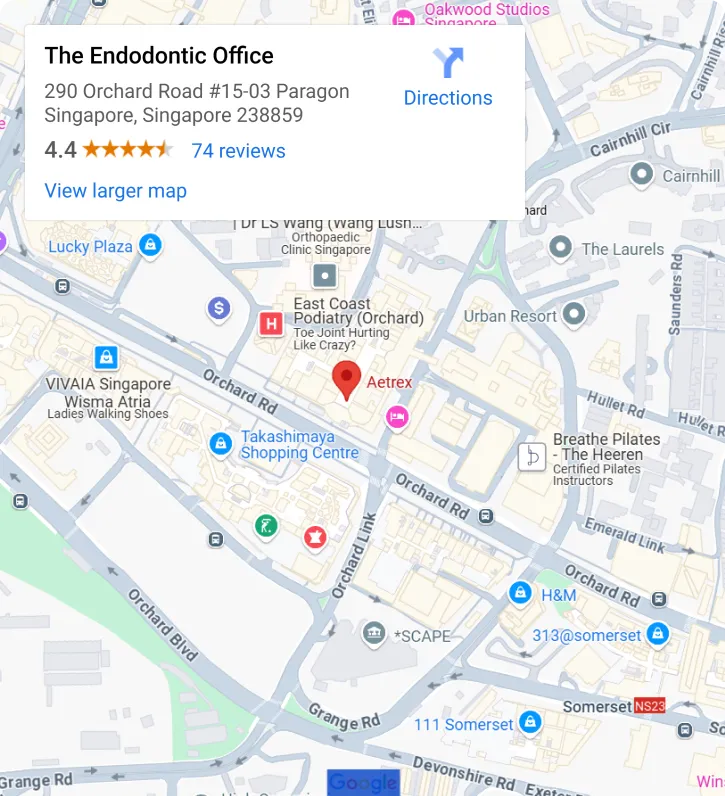


Orchard, Paragon Medical
Address: 290 Orchard Road, #15-03, Paragon, Singapore 238859
Phone: +65 6734 7790
WhatsApp: +65 9782 8446
Email: appointment@endooffices.com

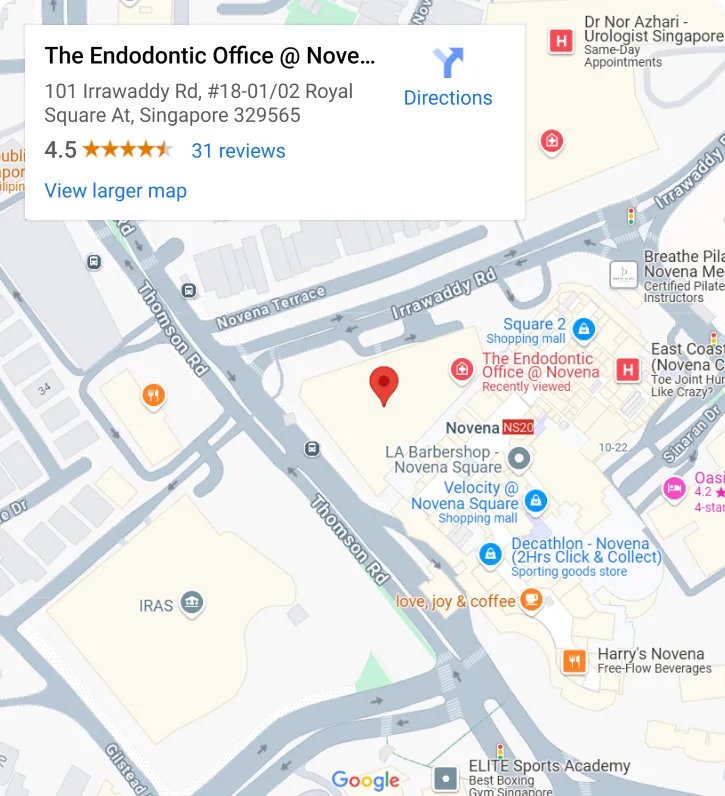
Novena, Royal Square Medical Centre
Address: 101 Irrawaddy Road, #18-01/02, Royal Square, Singapore 329565
Phone: +65 6259 3100
WhatsApp: +65 8078 9638
Email: appointment@endooffices.com

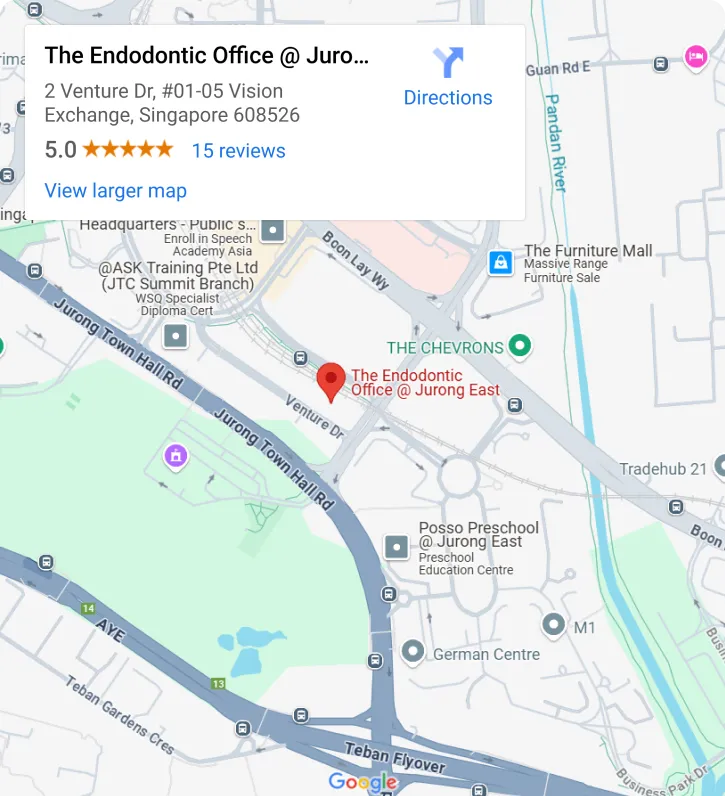
Jurong East, Vision Exchange
Address: 2 Venture Drive, #01-05, Vision Exchange, Singapore 608526
Phone: +65 6874 7790
WhatsApp: +65 8076 1813
Email: appointment@endooffices.com
The Endodontic Office is a trusted specialist dental practice in Singapore focused on advanced root canal treatment, effective dental pain relief, and preserving natural teeth through modern technology and expert care.

©2026 The Endodontic Office | All Rights reserved | Privacy Policy | Digital Marketing by Remedo