

What Is the Difference Between an Endodontist and a Dentist?

Most people see their general dentist for routine care, cleanings, fillings, and preventive services. But when dental pain becomes severe, or an infection affects the inside of the tooth, a general dentist may refer you to an endodontist. Many patients wonder why this referral is necessary and what makes an endodontist different from a regular dentist.
While both professionals are trained in oral health and tooth care, their expertise, training, and daily practice differ significantly. Understanding this difference can help you make informed decisions about your dental treatment, especially when it comes to complex procedures like root canal therapy.
At The Endodontic Office, our specialists focus exclusively on diagnosing tooth pain, treating dental infections, and saving natural teeth through advanced endodontic procedures. This blog explains what sets endodontists apart from general dentists and when you may need to see one.
What Does a General Dentist Do?
A general dentist is your primary oral healthcare provider. Most dental care starts with a general dentist, who focuses on prevention, early diagnosis, and everyday treatment. Their responsibilities typically include:
- Routine dental cleanings and exams
- Cavity diagnosis and fillings
- Preventive care such as sealants and fluoride
- Crowns, bridges, and dentures
- Basic gum disease treatment
- Tooth extractions
- Oral health education
- Cosmetic dentistry such as whitening or veneers
General dentists complete dental school and receive training in a broad range of dental procedures. They serve as the foundation of oral healthcare and are the first professionals to detect issues like decay, cracks, or infections that may require specialist care.
What Does an Endodontist Do?
An endodontist is a dental specialist who focuses specifically on the inside of the tooth, including the dental pulp, root canals, and tissues surrounding the root. The word "endodontic" comes from “endo,” meaning inside, and “odont,” meaning tooth.
Endodontists are experts in diagnosing and treating tooth pain and infections. Their primary goal is to save natural teeth through procedures such as:
1. Root Canal Therapy
The most common procedure performed by endodontists. They remove infected pulp, clean the canals, disinfect the space, and seal the tooth.
2. Root Canal Retreatment
If a previous root canal has failed or become reinfected, an endodontist can retreat the tooth using advanced techniques.
3. Endodontic Surgery (Apicoectomy)
A microsurgical procedure that removes infection at the root tip when conventional root canal treatment is not enough.
4. Management of Dental Trauma
Endodontists help save teeth that have been knocked out, fractured, or severely injured.
5. Cracked Tooth Diagnosis and Treatment
They are skilled at finding small fractures that may not appear on standard X-rays.
6. Complex Pain Diagnosis
Many types of oral pain do not originate from cavities. Endodontists are trained to uncover the true source of stubborn or unexplained tooth pain.
In short, endodontists are the specialists you see when the inside of the tooth is damaged, infected, or painful.
Training: Dentist vs Endodontist
Training is one of the biggest differences between a general dentist and an endodontist.
General Dentist Training
- Completes undergraduate studies
- Four years of dental school
- Earns a BDS, DDS or DMD degree
- Provides comprehensive general dental care
Endodontist Training
- Completes all requirements of a general dentist
- Completes an additional two to three years of full-time specialty training in endodontics
- Performs thousands of root canal-related procedures during training
- Specializes in advanced diagnostics, complex anatomy, microsurgery, and pain management
Endodontists dedicate their entire practice to saving teeth through endodontic procedures, offering a level of experience and precision beyond general training.
Experience and Expertise
While a general dentist may perform one or two root canals a week, an endodontist often performs several root canals each day. This level of repetition sharpens skills and minimizes complications.
Endodontists also receive specialized training in:
- Complex root anatomy
- Microscopic dentistry techniques
- Use of CBCT imaging
- Use of advanced tools such as rotary instruments and ultrasonic tips
- Pain management and anesthesia techniques
- Microsurgical approaches
This means that patients receive care that is more precise, efficient, and comfortable, especially for challenging cases.
Technology Used by Endodontists
Another major difference lies in the technology used. At The Endodontic Office, we use specialized equipment designed specifically for endodontic procedures, such as:
- High-resolution surgical microscopes
- Cone Beam CT (CBCT) imaging
- Ultrasonic instruments
- Digital radiography
- Advanced irrigation systems
These tools allow endodontists to see details that general dentists may not be able to detect, leading to better diagnosis and treatment outcomes.
When Do You Need to See an Endodontist Instead of a Dentist?
Although general dentists can perform root canals, they often refer patients to an endodontist when the case is complex or requires specialist-level care.
You may need an endodontist if:
- You have severe, lingering tooth pain
- Your tooth is extremely sensitive to hot or cold
- You have swelling, abscesses, or signs of infection
- A previous root canal has failed
- The tooth has narrow, curved, or unusually complex canals
- You have suffered dental trauma
- Your dentist finds a crack in the tooth
- Pain persists despite treatment
Seeing an endodontist early often leads to a faster recovery, reduced discomfort, and a better chance of saving the tooth.
Why Dentists Refer Patients to Endodontists
General dentists refer patients to endodontists to ensure the best possible outcome. Reasons for referral include:
- Need for advanced diagnostic imaging
- Complex anatomy beyond general capability
- Persistent pain not responding to treatment
- Concerns about a cracked tooth
- Failure of previous root canal therapy
- Need for surgical endodontics
Referrals also help dentists focus on preventive care, fillings, crowns, and overall oral health while allowing endodontists to manage more complicated cases.
Endodontist vs Dentist: Which Should You Choose for a Root Canal?
If your general dentist recommends a root canal, you always have the option to request a referral to an endodontist. Patients choose endodontists when:
- They want a specialist who had received further training in the procedure performs root canals every day
- The case is complex or involves difficult root anatomy
- They want the highest chance of long-term success
- They have anxiety about the procedure and want a more comfortable experience
- They previously had a root canal that failed
Endodontists are the most qualified professionals to treat the inside of the tooth and save it whenever possible.
Conclusion
While both general dentists and endodontists play essential roles in oral healthcare, their training and expertise differ significantly. A general dentist provides comprehensive care for the teeth and gums, while an endodontist specializes in treating the inside of the tooth, managing complex infections, and performing advanced root canal procedures.
If you are dealing with tooth pain, infection, or a previous failed root canal, seeing an endodontist ensures the highest level of diagnosis and treatment.
If you are experiencing tooth pain, sensitivity, or have been told you need a root canal, contact The Endodontic Office today. Our experienced endodontists use advanced technology and compassionate care to diagnose and save your natural teeth. Schedule your appointment now and experience the highest standard of endodontic treatment.
Our Locations
Multiple locations, one trusted team. Expert endodontic care wherever you are.
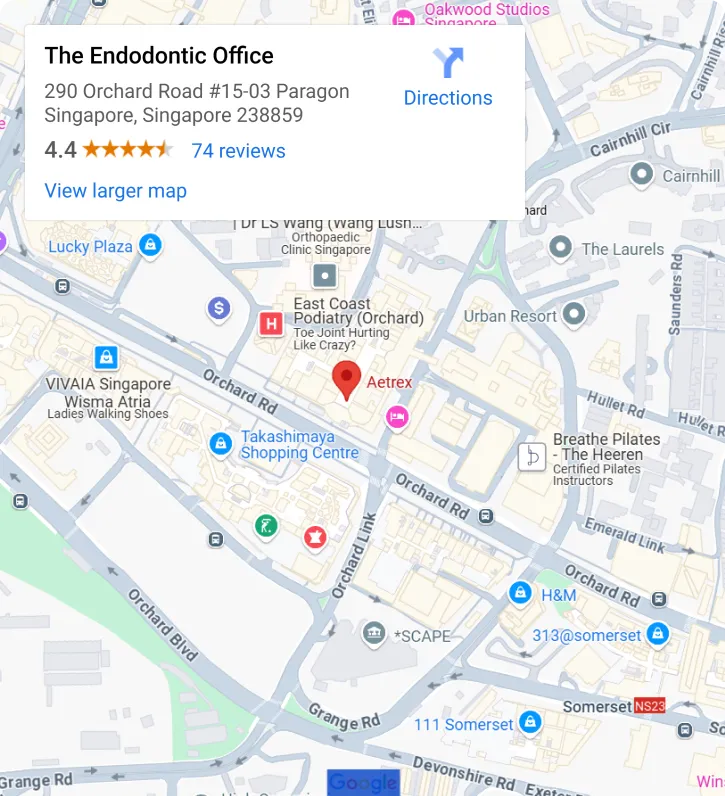


Orchard, Paragon Medical
Address: 290 Orchard Road, #15-03, Paragon, Singapore 238859
Phone: +65 6734 7790
WhatsApp: +65 9782 8446
Email: appointment@endooffices.com

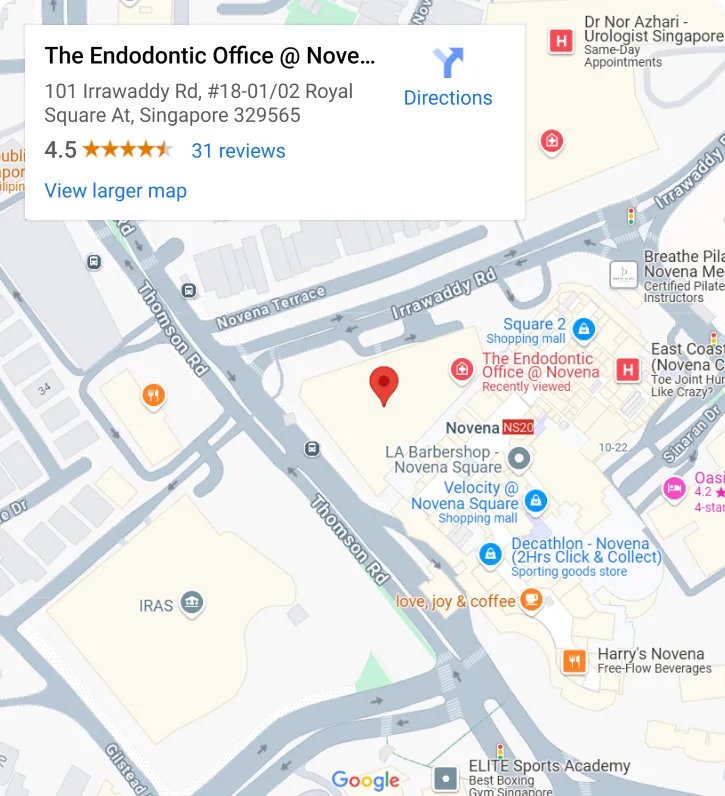
Novena, Royal Square Medical Centre
Address: 101 Irrawaddy Road, #18-01/02, Royal Square, Singapore 329565
Phone: +65 6259 3100
WhatsApp: +65 8078 9638
Email: appointment@endooffices.com

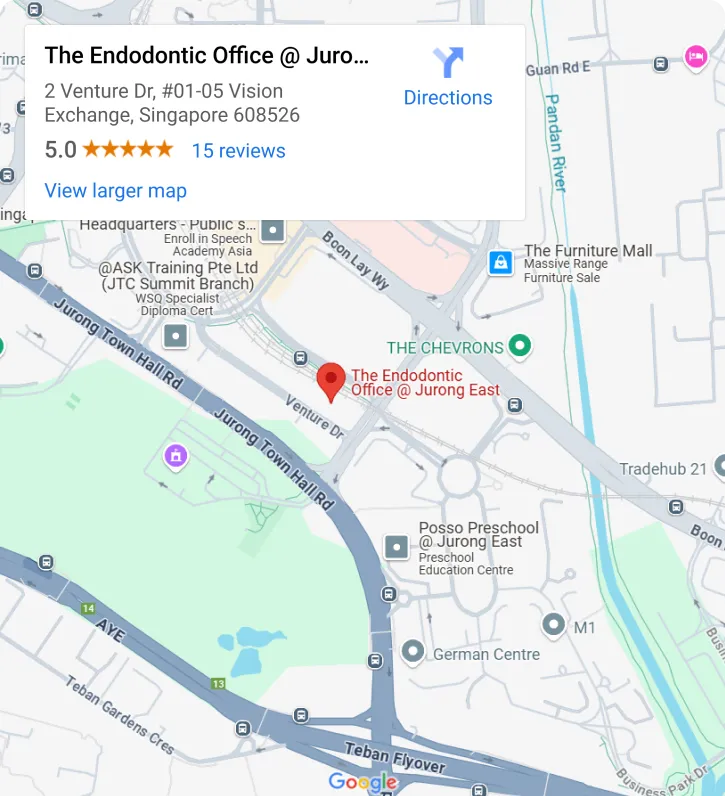
Jurong East, Vision Exchange
Address: 2 Venture Drive, #01-05, Vision Exchange, Singapore 608526
Phone: +65 6874 7790
WhatsApp: +65 8076 1813
Email: appointment@endooffices.com
The Endodontic Office is a trusted specialist dental practice in Singapore focused on advanced root canal treatment, effective dental pain relief, and preserving natural teeth through modern technology and expert care.

©2026 The Endodontic Office | All Rights reserved | Privacy Policy | Digital Marketing by Remedo