

Dental Injuries Guide: What to Do for Knocked-Out, Chipped, or Cracked Teeth

Hurting your teeth can be quite scary, and it usually happens when you least expect it. Whether it takes place during a weekend football match, from a minor trip on the pavement, or simply because you bit down on a piece of hard food, sudden damage to a tooth requires a calm approach. Dental emergencies happen to many people, and knowing what to do during the first few minutes can make a big difference to whether your tooth can be saved in the long run.
This guide gives you straightforward, practical steps to follow if you or someone in your family has a knocked-out, chipped, or cracked tooth. By learning these simple steps, you can handle the situation calmly and find the right help at a dental clinic in Singapore. The main goal here is to give you factual information so you can protect the tooth before you see a professional.
Understanding Dental Traumas and Why Time Matters
When a tooth is hit or damaged, the problem is often deeper than what you can see on the surface. A normal tooth has three main parts: the hard outer layer called enamel, a softer middle layer called dentine, and the inner part called the pulp. The pulp is where the nerves and blood vessels live. A hard knock can damage any of these layers, even if the tooth still looks alright from the outside. The tooth is also held in place by tiny fibres and tissues that connect the root to the jawbone.
Acting quickly is important if you want to keep the tooth healthy. For example, if a whole tooth comes out of the mouth, there is only a short window of time to put it back in place. The tiny cells on the root of the tooth start to die quickly when they are exposed to the air. For other problems like cracks or deep chips, getting help early stops bacteria from getting inside the inner pulp. If bacteria get into that inner space, it can cause a painful infection, which means you might need more complex treatment later on to save the tooth. Staying calm helps you look at the damage clearly, do the right first aid, and get to a dentist safely.
What to Do if You Have a Knocked-Out Tooth
A knocked-out tooth, which dentists call an avulsed tooth, is one of the most urgent situations you can face. If an adult tooth is knocked completely out of the bone, it can often be saved if you act quickly and carefully. Following these specific steps can help give the tooth the best chance of survival.
Hold the Tooth by the Top Part Only
Find the tooth right away. When you pick it up, always hold it by the crown, which is the white part you usually use for chewing. Do not touch the root, which is the pointed bottom part that sits inside the gum. The root has delicate cells on it that help the tooth stick back into the jaw, and touching them can damage them permanently.
Clean the Tooth Very Gently
If the tooth has dirt on it, rinse it quickly under cold water or cold milk for no more than ten seconds. Do not use soap, detergents, or any chemicals. Never scrub or scrape the tooth, and do not wrap it in a tissue or a towel. Doing this will dry out the root cells and ruin them.
Try to Put the Tooth Back in Place
If you feel able to do it, try to push the tooth gently back into its original space in the gums. Make sure it is facing the right way. Once it is in, bite down softly on a clean handkerchief or a piece of gauze to hold it still. This keeps the root cells alive in their natural environment.
Keep the Tooth Wet at All Times
If you cannot put the tooth back into the socket, you must keep it wet. Place it into a small cup or container filled with cold milk. If you do not have milk, the person who hurt their tooth can keep it inside their mouth between their cheek and gums, though you must be careful they do not swallow it. Do not store the tooth in plain water, because tap water causes the cells on the root to swell up and burst. You need to see a professional straight away, ideally within an hour of the injury.
Managing a Chipped Tooth
A chipped tooth is a very common issue. It often happens when people bump into each other during sports, have a minor fall, or bite on things like ice cubes or hard sweets. Even if a small chip does not hurt right away, you should still get it checked to make sure there is no hidden damage further down, and to smooth down any sharp edges that might cut your tongue or cheek.
Immediate Action Step: If you chip a tooth, rinse your mouth out with warm water to clear away any loose bits. If you can find the broken piece of the tooth, put it in a small container of milk and bring it to your appointment. Sometimes, a dentist can stick the original piece back onto the tooth using special dental materials.
If your lip or gum is bleeding, press a clean piece of cloth or gauze against the area until it stops. Putting a cold pack or a bag of frozen peas wrapped in a towel on the outside of your cheek can help keep any swelling down and make you feel more comfortable. After that, make an appointment to see a dentist to get the tooth fixed. Small chips are often repaired using a tooth-coloured material that matches the rest of your smile.
How to Handle a Cracked or Fractured Tooth
Unlike a chip, a crack in a tooth can be hard to see with your eyes. You might only notice it when you get a sharp pain while you are chewing your food, or when you drink something very hot or very cold. Sometimes the pain happens only when you release your bite. Cracks can be tiny lines on the outer enamel, or they can be deep splits that run all the way down to the root.
- Avoid chewing on that side: If you think a tooth is cracked, stop using that side of your mouth to chew. Putting pressure on the tooth can make the crack wider and cause more damage to the internal structure.
- Rinse your mouth: Use warm water to clean out any food trapped around the tooth.
- Get it checked early: A cracked tooth can let bacteria slowly leak into the middle of the tooth. If this happens, it can lead to an infection that might require treatment at The Endodontic Office to fix. Getting a factual diagnosis early helps you plan the right way to protect the tooth.
Practical Tips for Preventing Dental Injuries
Accidents happen, but you can do a few simple things to lower the risk of hurting your teeth.
Wear a Custom Mouthguard
If you or your children play sports where you might get hit in the face, like rugby, hockey, or basketball, a mouthguard is highly recommended. A mouthguard made by a professional fits your teeth exactly and cushions them against hard blows, which helps prevent broken teeth and cut lips.
Do Not Chew on Hard Objects
Many people crack their teeth because of daily habits rather than accidents. Avoid chewing on ice, unpopped popcorn kernels, or things like the ends of pens and pencils. These hard materials put a lot of strain on your enamel and can cause it to split over time.
Do Not Use Your Teeth as Tools
Your teeth are meant for chewing food, not for opening plastic packets, cutting clothing tags, or twisting off bottle caps. Using your teeth as tools is an easy way to chip or crack them by accident.
When to Visit a Dental Clinic in Singapore
You should always get a dental injury checked by a professional, even if the damage looks small and you do not feel any pain. Tiny cracks or nerve damage do not always cause symptoms straight away, but they can cause issues later on.
An appointment at a dental clinic in Singapore will involve a physical check and dental x-rays. The x-rays allow the dentist to look at the root of the tooth and the jawbone underneath, which cannot be seen from the outside. Getting a clear, factual assessment helps you understand what needs to be done to repair the tooth and keep your mouth healthy.
Seek Prompt Care with The Endodontic Office
If you have hurt a tooth and need clear advice on what to do next, please get in touch with us. The Endodontic Office provides care for dental traumas, cracked teeth, and root canal treatments. Contact our dental clinic in Singapore to book an appointment, where our team will look at your tooth and give you factual details about your treatment choices.
Frequently Asked Questions (FAQs)
Can a knocked-out tooth always be fixed?
No, it cannot always be saved, but your chances are much better if you put it back in or place it in milk within an hour. It is also important to know that baby teeth are not usually put back in, because doing so can hurt the adult tooth growing underneath the gum.
Does a chipped tooth mean I need a root canal?
No, not always. Small chips are usually fixed with a simple white filling or dental bonding to restore the shape of the tooth. You only need a root canal treatment if the break is deep enough to reach or damage the nerves in the middle of the tooth.
Is a cracked tooth a major emergency?
It does not require the same fast rush as a tooth that has come out completely, but you should still see a dentist quickly. If you wait too long, the pressure of chewing can make the crack grow deeper, which can cause an infection or lead to losing the tooth.
What is the best thing to clean a knocked-out tooth with?
You should only use cold milk or give it a very quick rinse with cold water. Never use soap, toothpaste, or mouthwash, and do not scrub the root, as this destroys the cells needed for the tooth to heal back into the gum.
Can I use painkillers for a tooth injury?
Yes, you can take over-the-counter painkillers by following the instructions on the packet. However, you must swallow the tablets normally. Never press a painkiller directly against your gums or the sore tooth, as the chemicals can cause a painful burn on the soft skin of your mouth.
Our Locations
Multiple locations, one trusted team. Expert endodontic care wherever you are.
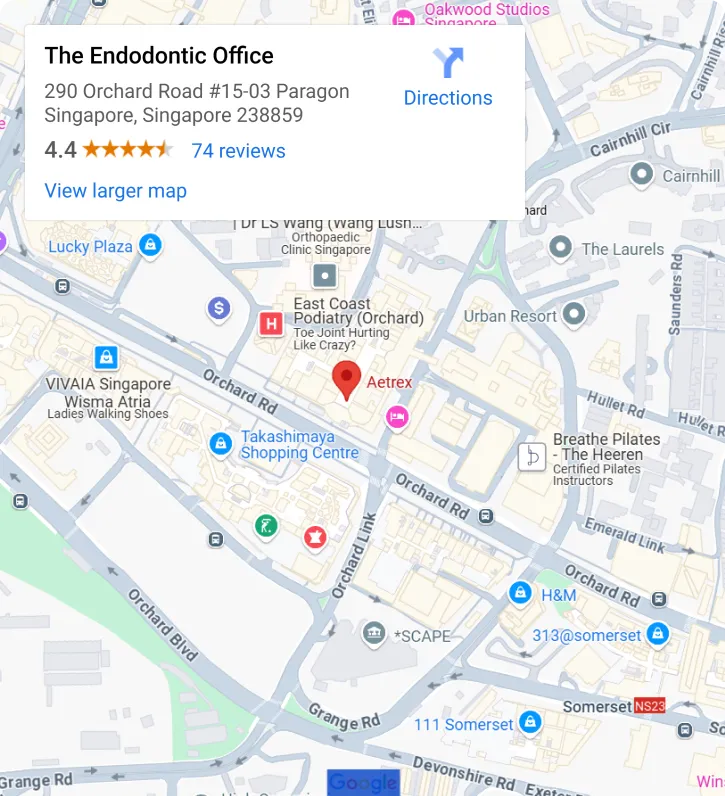


Orchard, Paragon Medical
Address: 290 Orchard Road, #15-03, Paragon, Singapore 238859
Phone: +65 6734 7790
WhatsApp: +65 9782 8446
Email: appointment@endooffices.com

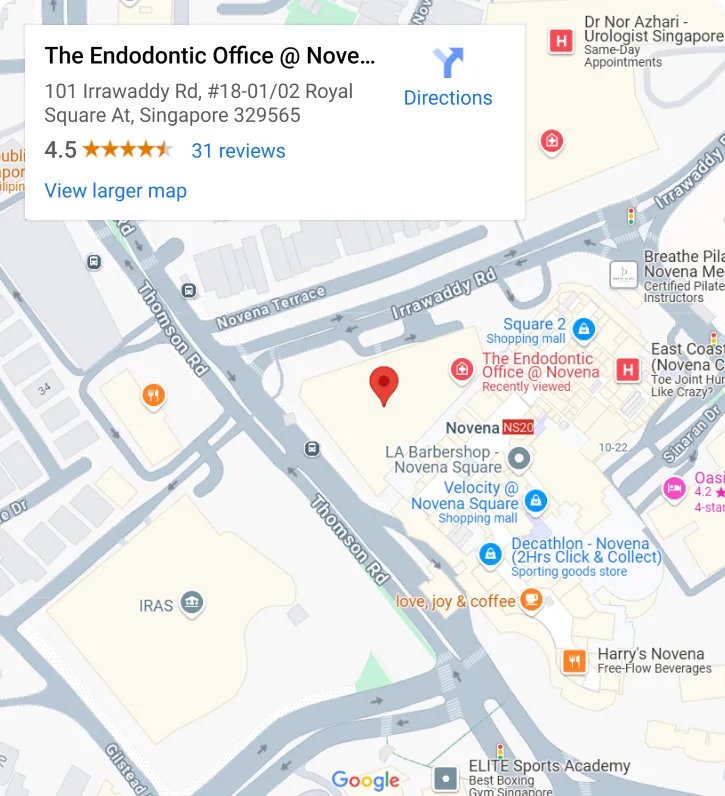
Novena, Royal Square Medical Centre
Address: 101 Irrawaddy Road, #18-01/02, Royal Square, Singapore 329565
Phone: +65 6259 3100
WhatsApp: +65 8078 9638
Email: appointment@endooffices.com

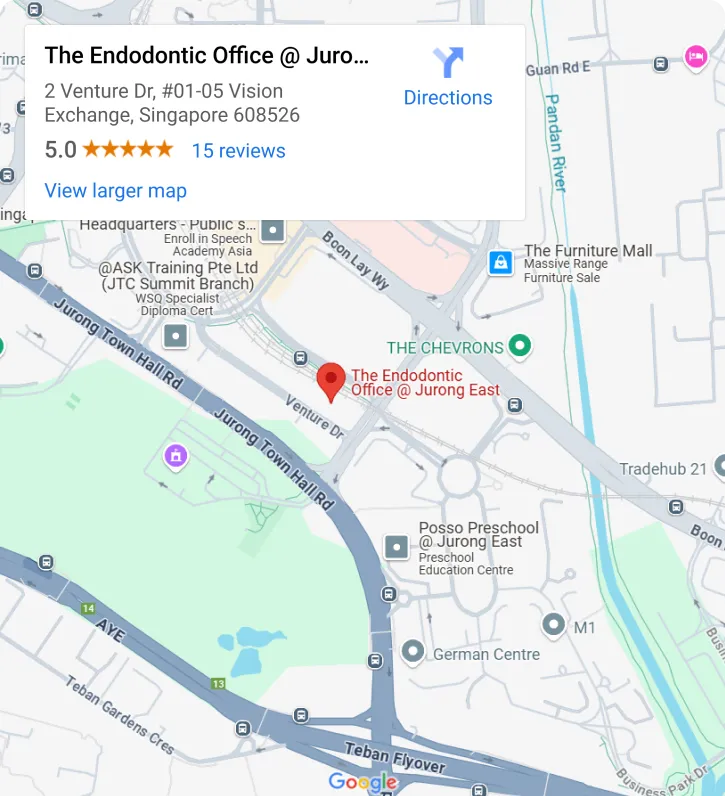
Jurong East, Vision Exchange
Address: 2 Venture Drive, #01-05, Vision Exchange, Singapore 608526
Phone: +65 6874 7790
WhatsApp: +65 8076 1813
Email: appointment@endooffices.com
The Endodontic Office is a trusted specialist dental practice in Singapore focused on advanced root canal treatment, effective dental pain relief, and preserving natural teeth through modern technology and expert care.

©2026 The Endodontic Office | All Rights reserved | Privacy Policy | Digital Marketing by Remedo