

Cracked Tooth Symptoms: How to Tell If Your Tooth Is Broken
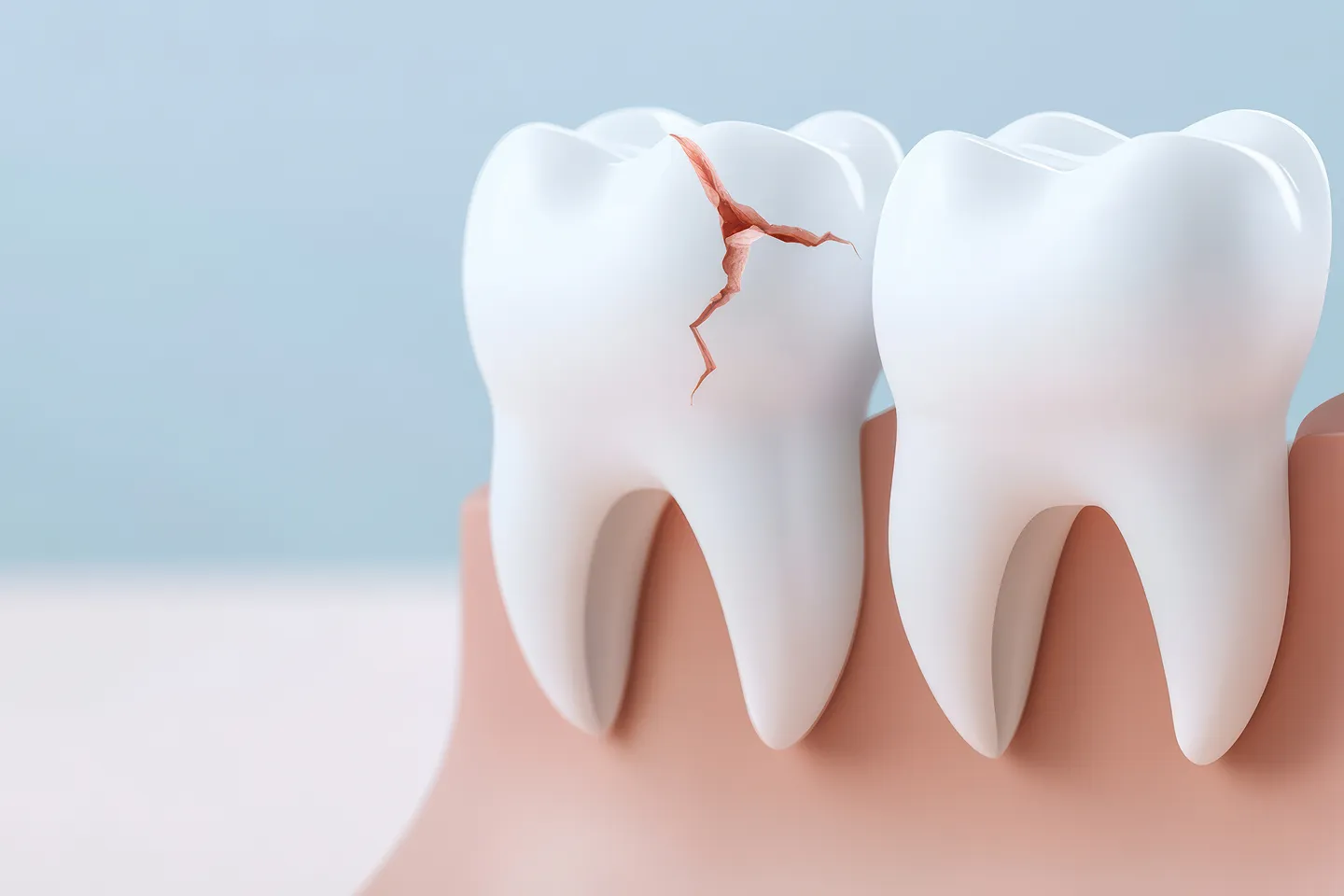
We have all been there. You are enjoying a meal, perhaps biting into something as innocent as a piece of crusty bread or a stray popcorn kernel, when suddenly you feel a sharp, fleeting twinge. It vanishes as quickly as it appeared, leaving you wondering if you imagined it. You check the mirror, but everything looks perfectly normal. There is no visible chip, no blood, and no obvious hole.
However, that tiny flash of discomfort is often the first sign of a "silent" dental issue. At The Endodontic Office, we frequently meet patients who have spent weeks or even months trying to figure out why their tooth hurts only "sometimes." Unlike a cavity, which usually presents as a consistent dull ache, a cracked tooth can be incredibly elusive.
If you are currently questioning whether that strange sensation in your mouth warrants a trip to a dental clinic in Singapore, this guide is for the purpose of helping you identify the subtle red flags of a fractured tooth.
Why Cracked Teeth Are Hard to Spot
The primary reason a cracked tooth is so frustrating is that it is often invisible to the naked eye. In many cases, the crack is so thin that it does not even show up on a standard dental X-ray. At The Endodontic Office, we refer to this as "Cracked Tooth Syndrome."
Because the enamel of your tooth is the hardest substance in your body, it does not always shatter when it breaks. Instead, it develops a microscopic fissure. When you bite down, the pressure causes the crack to open. When you release the bite, the crack snaps shut, irritating the sensitive soft tissue (the pulp) inside the tooth. This "rebound" effect is a classic symptom that we look for at our dental clinic in Singapore.
Common Symptoms of a Cracked Tooth
While every case is unique, there are several hallmark signs that suggest your tooth's structural integrity has been compromised. If you notice any of the following, it is wise to consult with The Endodontic Office for a thorough assessment.
1. Pain Only When Chewing or Biting
This is the most frequent symptom. You might feel a sharp pain when you apply pressure to a specific tooth, or more commonly, a jolt of discomfort when you release your bite. If you find yourself consciously shifting your food to the other side of your mouth to avoid a certain tooth, your body is sending you a clear message.
2. Sensitivity to Temperature Changes
Does a sip of iced water or a spoonful of hot soup cause a sudden wince? When a tooth is cracked, the temperature can travel through the fissure and reach the nerves inside. Unlike the general sensitivity people feel from receding gums, this pain is usually localized to one specific tooth. A dental clinic in Singapore can perform vitality tests to see how the nerve is responding to these changes.
3. Intermittent Discomfort
A cracked tooth does not always hurt 24 hours a day. You might go for days without feeling anything at all, only for the pain to return when you eat something particularly crunchy or sticky. This "on-again, off-again" nature is why many people delay seeking help from The Endodontic Office, hoping the problem will simply resolve itself.
4. Swollen Gums Around the Affected Tooth
If a crack extends down toward or below the gum line, it can lead to localized inflammation. You might notice a small bump on the gums or a general puffiness around one tooth. This often indicates that the crack has allowed bacteria to enter, potentially leading to an infection.
The Different Types of Tooth Cracks
Not all cracks are the same, and the way they are managed depends entirely on the direction and depth of the fracture. When you visit The Endodontic Office, our goal is to identify exactly which type of crack you have.
Craze Lines
These are tiny, superficial cracks that only affect the outer enamel. They are very common in adult teeth and are largely a cosmetic concern. They do not cause pain and typically do not require treatment at a dental clinic in Singapore.
Fractured Cusp
This occurs when a piece of the tooth's chewing surface breaks off, often around a large filling. While it can be startling, this type of break rarely damages the pulp. A simple crown is often enough to restore the tooth's function.
Vertical Cracked Tooth
This crack starts from the chewing surface and extends vertically toward the root. If caught early enough by The Endodontic Office, the tooth can often be saved with a root canal treatment and a crown. However, if the crack has reached the root, the tooth may no longer be viable.
Split Tooth
This is usually the result of an untreated cracked tooth. The tooth has literally split into two distinct parts. While it is very difficult to save the entire tooth, sometimes a portion of it can be salvaged through advanced procedures at a dental clinic in Singapore.
How we Identify a Crack at The Endodontic Office
Since cracks are so difficult to see, we use a variety of diagnostic tools to confirm the diagnosis. We start by listening to your story, where it hurts, what triggers the pain, and how long it lasts.
- Bite Tests: We may ask you to bite down on a small tool called a "tooth sleuth" to see if we can replicate the pain on a specific cusp.
- Transillumination: We use a bright fibre-optic light to shine through the tooth. A crack will block the light, creating a visible shadow within the tooth structure.
- High-Magnification Mirrors: We examine the tooth surfaces under significant magnification to look for those elusive "hairline" fractures.
- Periodontal Probing: We check the gum attachments around the tooth. A deep, narrow "pocket" in one specific spot is often a sign of a vertical crack.
As a dedicated dental clinic in Singapore, we focus on providing a clear diagnosis so that you can make an informed decision about your oral health.
Take Action for Your Smile at The Endodontic Office
A cracked tooth can feel like a mystery, but it is one that we are here to help you solve. We understand that dental pain can be stressful, and the uncertainty of an "invisible" crack only adds to that anxiety. Our team is committed to providing a calm, supportive environment where we treat you as an individual, not just a set of teeth.
At The Endodontic Office, we believe in a conservative approach. We want to help you retain your natural teeth for as long as possible. By addressing symptoms early at our dental clinic in Singapore, we can often stop a crack in its tracks and prevent more invasive procedures down the road.
If you are experiencing that "sometimes" pain or have a tooth that feels "not quite right," do not wait for the discomfort to become a constant ache. We invite you to reach out to us and experience a human, patient-centred approach to dental care. Let us help you bite, chew, and smile with confidence again.
Our Locations
Multiple locations, one trusted team. Expert endodontic care wherever you are.
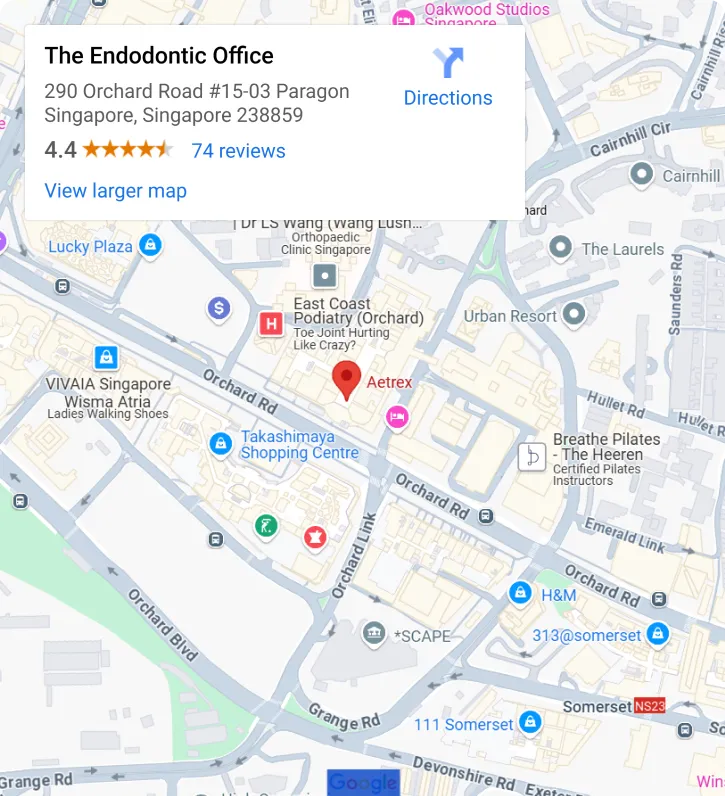


Orchard, Paragon Medical
Address: 290 Orchard Road, #15-03, Paragon, Singapore 238859
Phone: +65 6734 7790
WhatsApp: +65 9782 8446
Email: appointment@endooffices.com

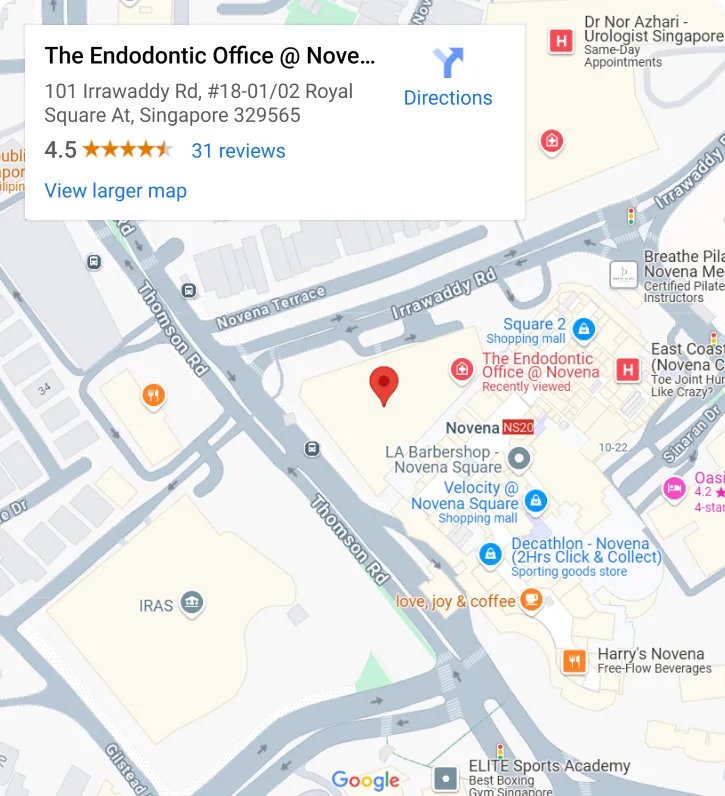
Novena, Royal Square Medical Centre
Address: 101 Irrawaddy Road, #18-01/02, Royal Square, Singapore 329565
Phone: +65 6259 3100
WhatsApp: +65 8078 9638
Email: appointment@endooffices.com

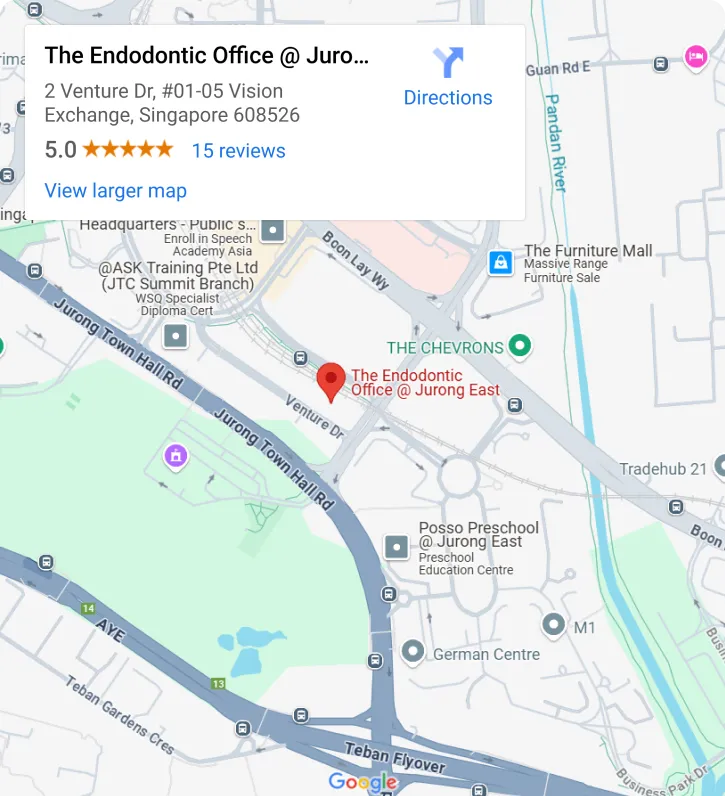
Jurong East, Vision Exchange
Address: 2 Venture Drive, #01-05, Vision Exchange, Singapore 608526
Phone: +65 6874 7790
WhatsApp: +65 8076 1813
Email: appointment@endooffices.com
The Endodontic Office is a trusted specialist dental practice in Singapore focused on advanced root canal treatment, effective dental pain relief, and preserving natural teeth through modern technology and expert care.

©2026 The Endodontic Office | All Rights reserved | Privacy Policy | Digital Marketing by Remedo