

Children’s Dental Injuries: First Aid Tips Every Parent Should Know

Whether it is a tumble on the school playground, an accidental collision during a weekend football match, or a clumsy mishap while learning to ride a bicycle, children are naturally prone to bumps and scrapes. As a parent, seeing your child hurt can be incredibly stressful. When an accident involves their face and mouth, the sight of blood and the fear of permanent damage can make an already tense situation feel entirely overwhelming.
Dental trauma in childhood is remarkably common, but knowing how to respond in those critical first few minutes can make a significant difference to the long-term survival of your child's teeth. Being prepared with basic first aid knowledge allows you to stay calm, soothe your child, and take the right steps before you can get to a professional.
If you are a parent living in the city, having the contact details of a dental clinic in Singapore ready can save precious time when an emergency strikes. This guide outlines practical, factual steps for managing the most common childhood dental injuries at home or on the scene.
Knocked-Out Teeth: The Most Time-Sensitive Emergency
A completely knocked-out tooth is one of the few true emergencies in aesthetic and restorative dentistry. The action you take immediately determines whether the tooth can be successfully replanted.
Is It a Baby Tooth or a Permanent Tooth?
The very first thing you must establish is whether the lost tooth is a primary (baby) tooth or an adult (permanent) tooth.
- Baby Teeth: If your child is under six years old, it is highly likely a baby tooth. Never try to put a baby tooth back into the socket. Doing so can accidentally damage the developing permanent adult tooth hidden directly beneath the gums.
- Permanent Teeth: If the tooth is an adult tooth, time is of the essence. You ideally want to get the tooth back into its socket or stored correctly within thirty to sixty minutes.
Step-by-Step Handling for an Adult Tooth
- Find the tooth immediately: Pick it up by the crown (the smooth, white part you normally see in the mouth). Never touch the root, as this can destroy the delicate living cells needed for reattachment.
- Clean it gently if needed: If the tooth is covered in dirt or sand, rinse it quickly under cold tap water or milk for no more than ten seconds. Do not scrub it, do not use soap, and do not wrap it in a tissue.
- Try to reinsert it: If your child is calm and old enough to cooperate, gently push the tooth back into its original socket. Have them bite down gently on a clean handkerchief or piece of gauze to hold it in place.
- Use a storage medium if reinsertion is not possible: If you cannot place it back in the socket, keep the tooth alive by submerging it in a small cup of cold, fresh milk. If milk is unavailable, use saliva by having the child spit into a container, or look for a specialised saline solution. Do not store the tooth in plain water, as this causes the root cells to burst.
Broken, Chipped, or Cracked Teeth
A fractured tooth is a very common result of a sports injury or a hard fall onto a concrete surface. While it may not require the split-second panic of a knocked-out tooth, it still needs prompt clinical attention.
Immediate Assessment
Gently wipe away any blood or dirt from the mouth using warm water on a clean cloth. Look closely at the remaining tooth structure. If you can find the broken fragment of the tooth, collect it and keep it moist in milk or water. In many cases, a practitioner can bond the original piece back onto the tooth structure.
Managing Pain and Sensitivity
A chipped tooth can feel sharp against your child's tongue and can be highly sensitive to cold air or liquids. You can apply a small piece of sugar-free chewing gum or dental wax over the rough edge to protect their mouth from cuts. If the child is experiencing pain, administer an appropriate dose of children's paracetamol or ibuprofen according to their age and weight.
Displaced Teeth: Pushed In or Knocked Awry
Sometimes a hard blow does not knock a tooth out, but leaves it severely loosened, twisted, or pushed deep into the gum tissue (known as an intrusion).
How to Help Your Child
Do not attempt to force the tooth back into its proper position yourself, as this can break the underlying bone or sever the delicate blood supply to the tooth. Instead, encourage your child to avoid touching or wiggling the tooth with their tongue. Stick strictly to a soft or liquid diet until a professional can evaluate the stability of the tooth and determine if a temporary splint is required.
Soft Tissue Injuries: Managing Cuts to Lips, Tongue, and Gums
The mouth has an exceptionally rich blood supply, which means even a tiny nick to the lip, inside of the cheek, or the tongue can bleed profusely. This sudden flow of blood often makes the injury look much worse than it actually is.
Controlling the Bleeding
- Stay calm to help keep your child's heart rate down, which naturally slows the bleeding.
- Apply firm, direct pressure to the bleeding area using a clean piece of gauze or a damp washcloth for a solid five to ten minutes.
- If the injury is inside the lip, gently press the lip against the child's teeth to create counter-pressure.
- Offering an older child an ice cube to suck on, or applying a cold compress to the outside of the face, can reduce internal swelling and help constrict the blood vessels.
When to Head Straight to the Accident and Emergency (A&E) Department
While most dental injuries can be managed initially by a dental practitioner, certain symptoms mean you need to seek immediate medical attention at a hospital emergency room.
If your child experienced a heavy blow that caused them to lose consciousness, even for a few seconds, or if they are vomiting, dizzy, confused, or suffering from a severe headache, they must be checked for a concussion. Similarly, if you suspect their jaw is fractured because their teeth no longer fit together normally when they bite down, emergency medical care is essential.
Arranging a Professional Evaluation
First aid is a vital tool to stabilise an injury, but it must always be followed by a formal clinical examination. A professional can take digital X-rays to check for hidden root fractures beneath the gumline and ensure the tooth receives the correct support to heal. If you are navigating a dental injury or looking to establish a relationship with a family practitioner, finding a dedicated dental clinic in Singapore is an important step to ensure you have a safe place to turn whenever an unexpected accident occurs.
Frequently Asked Questions
What happens if a baby tooth is knocked out prematurely?
When a primary tooth is lost early due to trauma, the surrounding teeth can sometimes tilt or shift into the vacant space. This can reduce the room available for the adult tooth when it is ready to emerge years later. A clinician will monitor the space and may recommend a simple device called a space maintainer to keep the gap open.
Will a damaged child's tooth turn black?
Just like a bruise on your arm, a tooth that has suffered internal trauma can change colour as blood breaks down inside the pulp. It may turn grey, yellow, brown, or black over the weeks following an accident. This indicates that the nerve inside may be injured or dying, meaning you should arrange an evaluation to check for infection.
Can a root canal treatment be performed on a child's tooth?
Yes. If an injury damages the inner nerve of a permanent tooth that has not fully finished growing, specific endodontic treatments are available to save it. For tailored concerns regarding the internal structures of injured teeth or specialised nerve therapies, the clinical team at The Endodontic Office provides assessments to help guide the long-term recovery of young smiles.
How can I protect my child's teeth during sports?
The most reliable preventive measure is a custom-fitted sports mouthguard. Unlike standard "boil-and-bite" guards available at high-street shops, a custom mouthguard made from an impression of your child's teeth provides a precise fit and superior shock absorption, drastically reducing the risk of fractures and knock-outs.
Our Locations
Multiple locations, one trusted team. Expert endodontic care wherever you are.
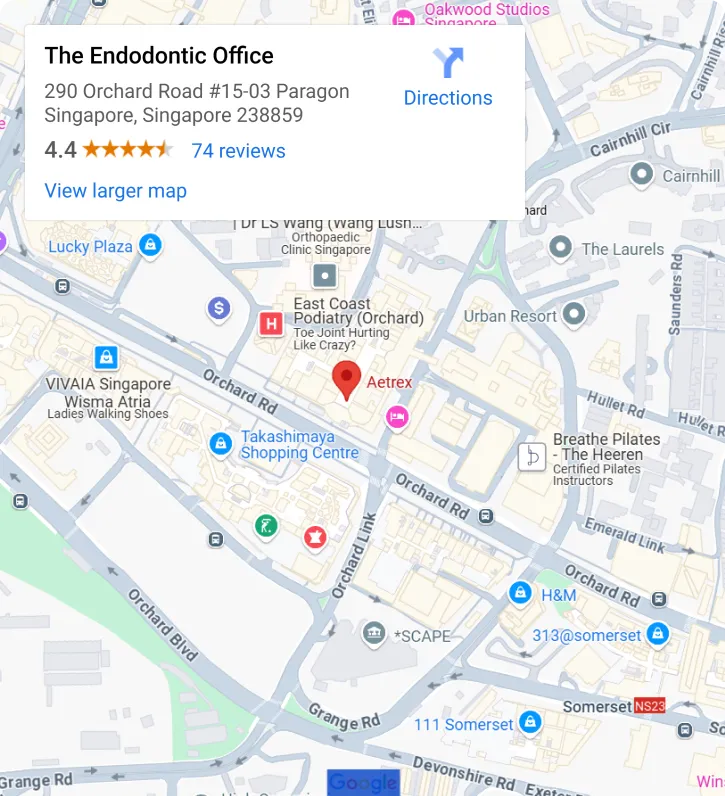
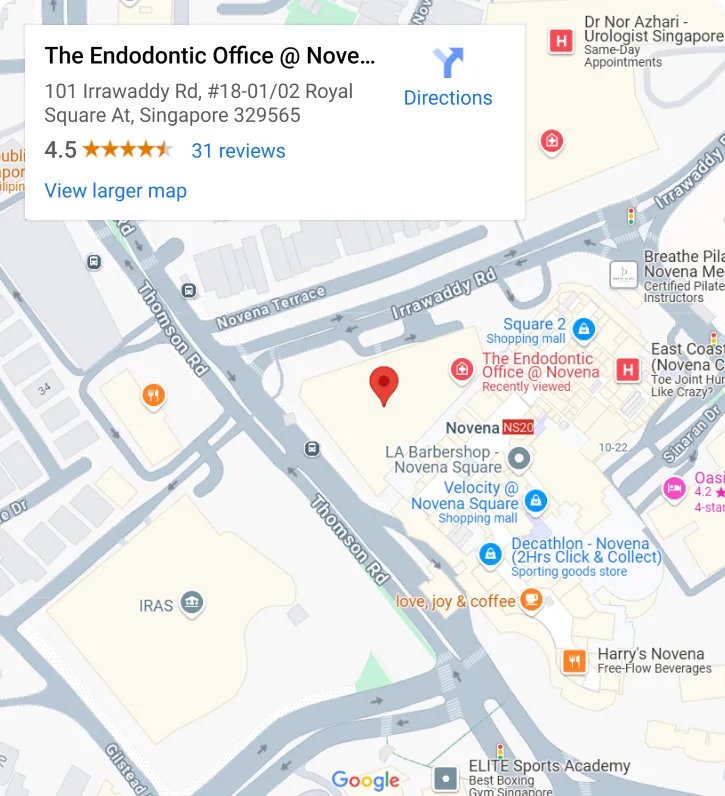
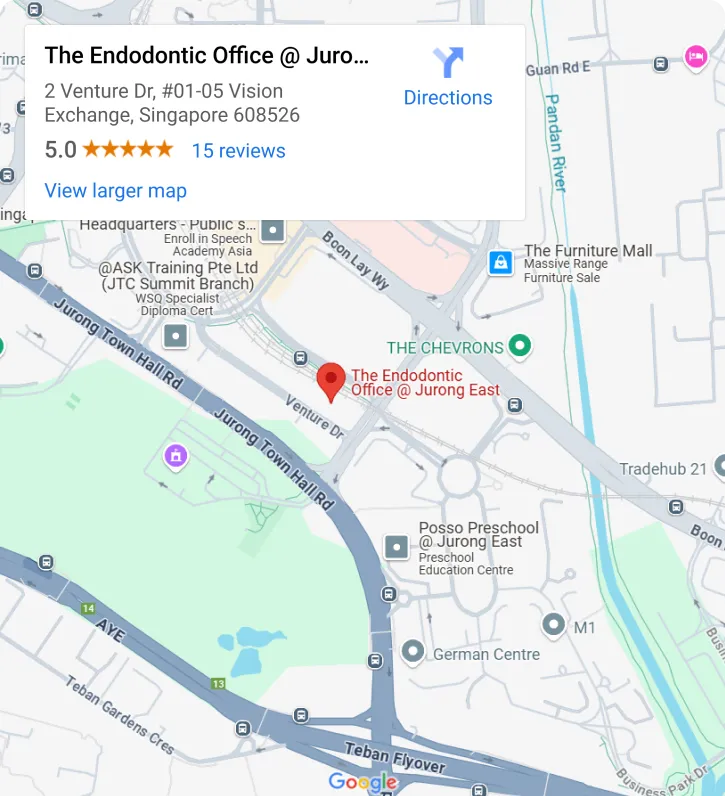


Orchard, Paragon Medical
Address: 290 Orchard Road, #15-03, Paragon, Singapore 238859
Phone: +65 6734 7790
WhatsApp: +65 9782 8446
Email: appointment@endooffices.com

Novena, Royal Square Medical Centre
Address: 101 Irrawaddy Road, #18-01/02, Royal Square, Singapore 329565
Phone: +65 6259 3100
WhatsApp: +65 8078 9638
Email: appointment@endooffices.com

Jurong East, Vision Exchange
Address: 2 Venture Drive, #01-05, Vision Exchange, Singapore 608526
Phone: +65 6874 7790
WhatsApp: +65 8076 1813
Email: appointment@endooffices.com
The Endodontic Office is a trusted specialist dental practice in Singapore focused on advanced root canal treatment, effective dental pain relief, and preserving natural teeth through modern technology and expert care.

©2026 The Endodontic Office | All Rights reserved | Privacy Policy | Digital Marketing by Remedo